


 CDN NEWS |
  US NEWS







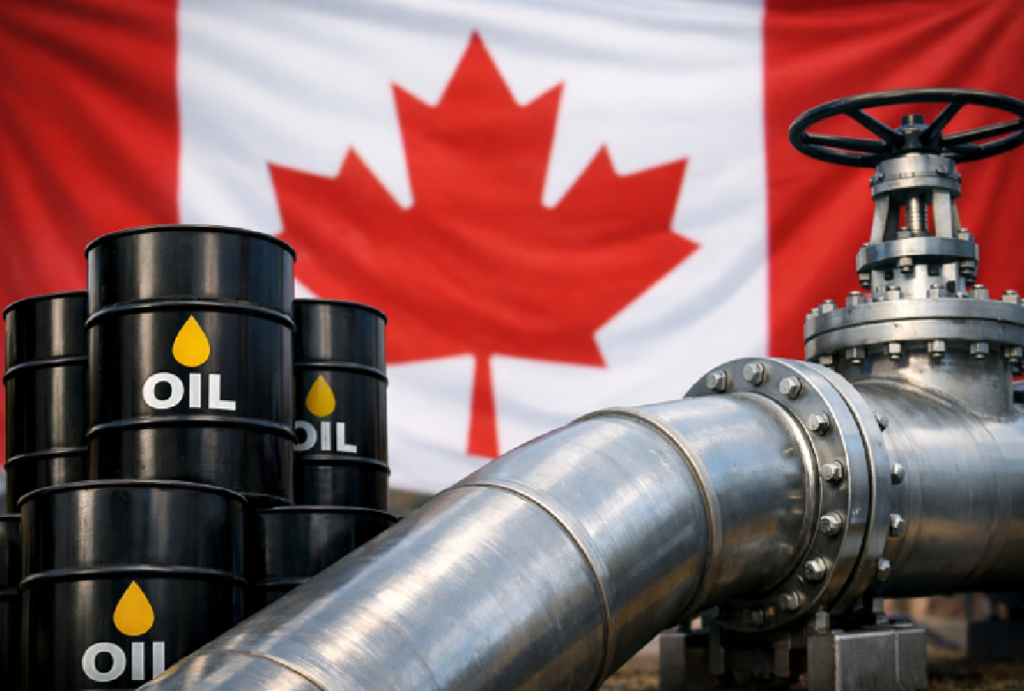
Debates over carbon capture and storage (CCS) often stay trapped at the project level—costs, technical performance, and risk. Those details matter, yet they risk obscuring larger questions about policy design, economic burden, national interest, and the big question: Why?
Why is Canada pursuing Net-Zero by 2050? The following questions are offered not as settled conclusions, but as a catalyst for clearer thinking about the Net-Zero 2050 path Canada is on.
1. Is net-zero by 2050 still formal Government of Canada policy?
If the legislated target remains in force, every subsequent discussion about technology, investment, and regulation must be measured against that binding commitment rather than against an idealized, unconstrained future.
2. If net-zero 2050 remains the policy, is CCS one of the few practical tools that allows Canadian hydrocarbon producers to keep operating and generating economic value while lowering measured emissions intensity?
Or is the preferred outcome simply a managed decline in domestic production and a quiet transfer of market share to jurisdictions that face fewer constraints?
3. Is CCS expensive?
Relative to what? Relative to forced production cuts, stranded assets (early asset write-downs under a strict emissions ceiling), or the loss of export revenues and high-wage jobs?
Cost cannot be judged in isolation from the alternatives that current policy actually presents to producers.
4. Given that net-zero 2050 constitutes a national economic restructuring, does the federal government have an obligation to treat each industry equitably with respect to compliance costs and regulatory risk?
The goal itself is expensive, yet Canadians have never been given a clear accounting of those costs from the federal government. Although there have been cost-benefit analyses conducted by other such as economists Robert Lyman and Ross McKitrick, the federal government has not provided any comprehensive cost-benefit analysis.
When it comes to CCS some argue that the companies should pay the full cost, while others argue that public-private cost sharing, as is done in other jurisdictions, is appropriate. This raises the question: Why should the oil and gas industry be expected to shoulder a disproportionate share of the compliance cost and regulatory risk when other large-emitting or hard-to-abate sectors (steel, cement, chemicals, automotive, heavy transport, agriculture, buildings) continue to receive transition supports, tax credits, or more gradual phase-in timelines? Selective burden-sharing on the oil and gas sector therefore raises fundamental questions of fairness, transparency, and democratic accountability.


5. What is the cumulative cost—capital, operating, and opportunity—of pursuing net-zero 2050 across the entire Canadian economy, and who ultimately pays?
Households pay through higher energy and materials prices, taxpayers pay through ongoing fiscal support, workers pay through slower investment and reduced competitiveness, the economy pays through industrial and economic degrowth.
6. How does expensive domestic energy and a constrained hydrocarbon sector affect Canada’s ability to attract investment, maintain fiscal capacity, and retain practical sovereignty over its resource endowment in an increasingly multipolar and energy-hungry world?
Energy policy does not operate in a vacuum; it shapes national resilience and is the cornerstone of national security. The evidence is clear from the EU and the UK, when domestic energy costs rise and hydrocarbon development is systematically constrained by regulation, capital flight follows, tax revenues erode, citizens face energy poverty, industries relocate, and degrowth prevails. In a world where energy demand continues to climb and major powers treat reliable hydrocarbons as strategic assets rather than liabilities, self-imposed scarcity signals vulnerability not virtue.
7. Given that Canada accounts for roughly 1.4 percent of global CO2 emissions while China accounts for roughly 33 percent, does a unilateral Canadian net-zero trajectory, pursued at significant domestic cost, meaningfully alter the global emissions trajectory?
There is no study or scientific method that can demonstrate how, or even that, Canada’s further reductions will measurably improve Earth’s climate. The calculated effect is so small as to be indistinguishable from natural variability and observational uncertainties. If the stated purpose of Canada’s net-zero by 2050 target is to reduce the country’s influence on global climate change, the policy fails its own test. Further domestic reductions, even to absolute zero, cannot produce a measurable improvement in the global climate system. This raises serious questions about the economic and strategic case for Net-Zero by 2050.
A policy that cannot solve the problem it claims to address therefore ought to be reconsidered. The economic costs, industrial constraints, and strategic trade-offs imposed by the Net-Zero by 2050 framework cannot be defended solely on climate grounds when the climate outcome is, by the numbers, a rounding error.
If the climate impact is marginal, the economic and strategic justification for accepting higher costs and reduced industrial capacity deserves closer scrutiny.
8. If the goal is genuine prosperity and resilience rather than an abstract emissions target, what alternative approach—focused on regulatory streamlining, removing barriers to investment and production, and allowing market-driven commercial abatement technologies to compete on their own merits—would better serve Canadian interests without adding further layers of taxation or compliance costs?
The choice is not merely which technology to favour, but whether the overarching policy framework itself remains fit for purpose. Is energy abundance to be treated as a national advantage to be leveraged, or as a problem to be managed out of existence?
These questions will not resolve themselves through technical studies of individual projects. They require an honest reckoning with trade-offs that successive governments have preferred to leave unexamined; trade-offs that touch investment, living standards, industrial competitiveness, and the practical exercise of Canadian sovereignty. Canadians deserve an open national conversation and debate on Net-Zero by 2050, not another round of managed consensus. The time has come to ask, without evasion or soft language, whether Net-Zero by 2050 is worth the real and mounting costs it imposes on the country’s future.
Tammy Nemeth is a UK-based energy analyst and consultant and the author of The Nemeth Report on Substack.
Share This:





















PERSPECTIVE: Improving Canada’s Energy and Tax Policies Could Increase Business Investment and Restore the Country’s Competitiveness in the Energy Sector