


 CDN NEWS |
  US NEWS







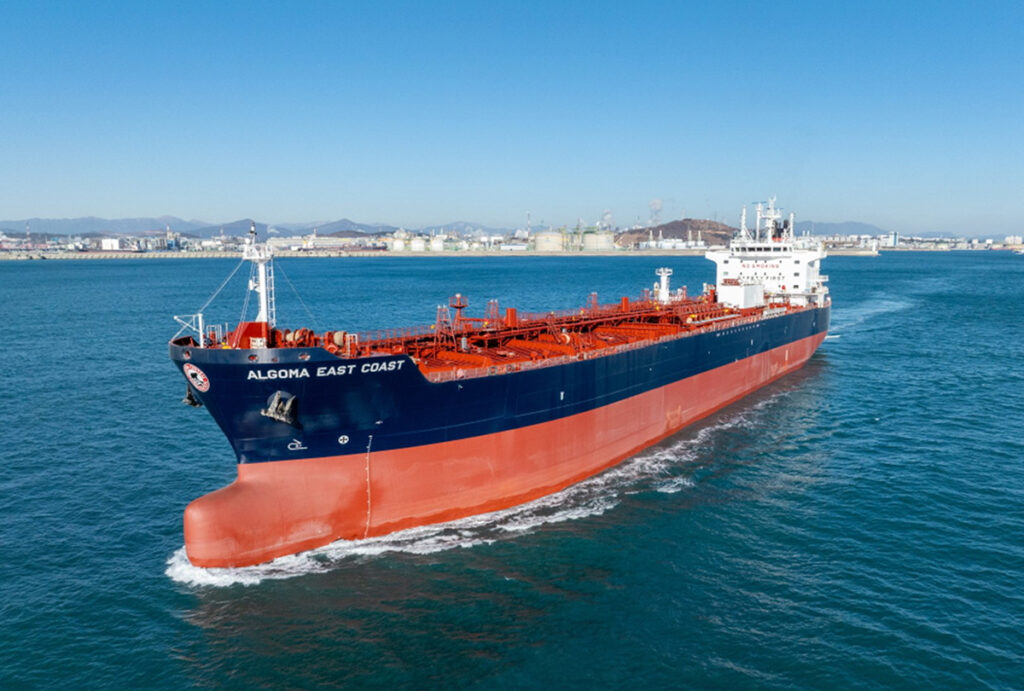
There never was a legitimate reason for the tanker ban in the first place.
On May 26, private member’s Bill C-264 is up for debate in the House of Commons. The bill is short and sweet, with a single proposed action: “The Oil Tanker Moratorium Act, Chapter 26 of the Statutes of Canada, 2019, is repealed.” That’s it; the whole shebang.
Of course, compared to any kind of transport — tankers, pipelines, railways, highways — private members’ bills tend to go nowhere fast. But this bill — to repeal the federal government’s tanker ban — is worthy of greater consideration, given its importance to Canada’s economy.
The biggest reason to repeal the ban is that there was never a legitimate reason for it in the first place. Oil, fuel and large vessels with large fuel tanks have been transiting the waters of northern British Columbia, moving to and from Alaska to the U.S. mainland and points farther south for many decades, with great safety.
As we noted in a study published by the Fraser Institute in 2017 (just a couple of years before the Trudeau government enacted the tanker ban), there has not been a single major spill from oil tankers or other vessels in Canadian waters, east coast or west, since the mid-1990s (and that was a fuel leak, not an oil spill). There have been a few smaller fuel and oil spills, but nothing large or damaging by international standards.



According to a study by the federal government, a major spill of more than 10,000 tonnes is likely to occur once every 242 years. Likewise, a spill of 100 to 1,000 tonnes is expected to occur once every 69.2 years. And the history of oil transport off Canada’s coasts is one of incredible safety, whether the transport is of Canadian or foreign origin.
That’s why the tanker ban (officially known as Bill C-48) was actually never about environmental protection. It was about stopping pipelines. Back then, the target was the Trans Mountain Expansion pipeline project. Now, it’s a potential million-barrel-per-day pipeline from Alberta to B.C. Indeed, under the Memorandum of Understanding (MOU) signed last November by Prime Minister Mark Carney and Alberta Premier Danielle Smith, the new pipeline would allow Canadian oil to be exported to Asia and points west, breaking the buyer’s monopoly currently enjoyed (but increasingly unneeded) by the United States. This is, in theory at least, in line with the prime minister’s stated preference for the diversification of Canadian trade.
So, there was never a good reason to institute the tanker ban, but there’s good reason to kill it. Eliminating one more potential roadblock to a new Alberta-B.C. pipeline would remove one more barrier to potential investors interested in seeing Canada’s oil produced and sold at top-dollar prices on world markets. Lining up those investors is Smith’s greatest challenge in the MOU process.
Bill C-264 is a refreshingly short, targeted piece of proposed legislation, which would remove a superfluous barrier to investment in a new path to Asian oil exports. It would not increase environmental risk; it might let Alberta produce and sell more oil for the benefit of Alberta and all of Canada and it might assist in trade diversification that the prime minister keeps talking about. A win-win-win thing, if there ever was one.
Kenneth Green is a senior fellow at the Fraser Institute
Share This:





















PERSPECTIVE: Improving Canada’s Energy and Tax Policies Could Increase Business Investment and Restore the Country’s Competitiveness in the Energy Sector