CDN NEWS |
  US NEWS









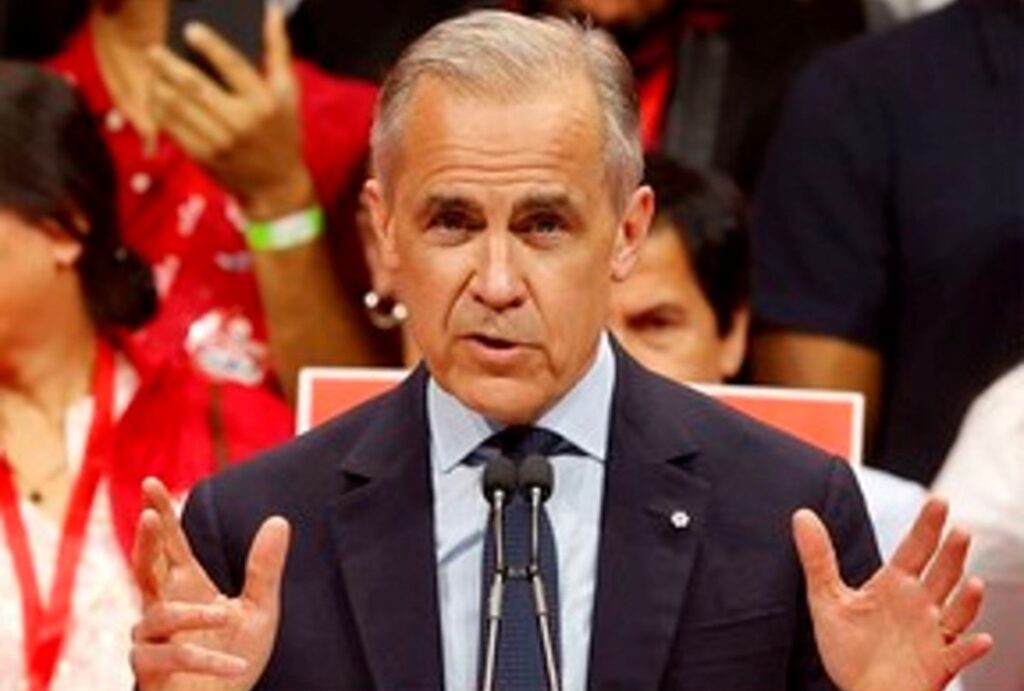
Exemptocracy: a hybrid regime where the outward forms of liberal democracy—elections, statutes, the “rules-based order”—remain intact, while real power operates through the discretionary granting of exemptions, carve-outs, waivers, fast-tracks, and regulatory mercy by the Prime Minister’s Office and its inner circle. The law is not repealed. It is simply not applied to the favoured. Everyone else lives under the full, chilly weight of the rule book.
Since at least January 2026, Mark Carney has been repeating at meetings and speeches that there is a “new world order” and Canada is helping to shape it. This is true; but not in the way Canadians think. If you want to understand what’s really happening in Canada right now, forget the polite terms—“industrial strategy,” “targeted relief,” “nation-building.” Ask yourself one simple, gut-check question the next time you’re at the Tim’s drive-thru or gobsmacked by your electricity bill: “Where am I in the New Feudal Order?”
Canada likes to tell itself a story. We’ve built a country on the rule of law, federal balance, and a belief—shared by veterans, premiers, and newcomers alike—that no one stands above the rules; no one is above the law. Ottawa and the provinces might bicker, but the game was supposed to be (relatively) fair, the refs impartial, and the rules transparent. The implied social contract, for all its flaws, was built on a sense of shared citizenship, open institutions, and respect for the law.
But that’s not what’s happening now.
Donald Savoie’s “court government” and Jeffrey Simpson’s “friendly dictatorship” were prophetic. But the situation has mutated. Indeed, Carney and the Liberals have been setting the example in Canada of this new world order. A suggested term (I’m open to suggestions!) for the Canadian democratic backsliding is Exemptocracy: a hybrid regime where the outward forms of liberal democracy—elections, statutes, the “rules-based order”—remain intact, while real power operates through the discretionary granting of exemptions, carve-outs, waivers, fast-tracks, and regulatory mercy by the Prime Minister’s Office and its inner circle. The law is not repealed. It is simply not applied to the favoured. Everyone else lives under the full, chilly weight of the rule book. Pair that with what Joel Kotkin describes as technocratic feudalism—rule by credentialed experts who treat citizens as subjects to be managed for the greater net-zero, resilient, inclusive order—and you have the New Feudal Order.
Exemptocracy: a hybrid regime where the outward forms of liberal democracy—elections, statutes, the “rules-based order”—remain intact, while real power operates through the discretionary granting of exemptions, carve-outs, waivers, fast-tracks, and regulatory mercy by the Prime Minister’s Office and its inner circle. The law is not repealed. It is simply not applied to the favoured. Everyone else lives under the full, chilly weight of the rule book.
No tanks. No soldiers on the streets. Just targeted exemptions, mutable “national interest” designations, and a quiet hierarchy of access. What began as an effort to align bureaucratic decision-making with political priorities has graduated into something far more ambitious and unsettling: a Canadian variant of committee-controlled economic direction, echoing “socialism with Chinese characteristics.” This is evident in its blend of state steering, selective enforcement, and party-aligned incentives—minus the overt one-party apparatus, of course—although at this point in Canada’s political system it almost seems like a uniparty.
Pierre Trudeau dreamed of something similar in the 1970s and 1980s, culminating in the National Energy Program (NEP), which sought heavy federal intervention to Canadianize the oil patch, control prices, and redistribute revenues from the West to the East. He faced fierce resistance and economic blowback.
Not so today. Under Liberal Prime Minister Mark Carney, a more sophisticated version is taking shape through layered industrial strategies, fast-tracked projects, and discretionary relief. Look at the exhibits, fresh as this week’s headlines.
Let’s start with the Major Projects Office (MPO) launched in August 2025 to fast-track “nation-building” initiatives that are, on an ongoing basis, loosely defined by Cabinet to enable maximum discretion: ports, high speed rail, wind projects, critical minerals, LNG expansions, mines, and hydro-electric projects. Multiple tranches of multibillion-dollar proposals have been referred for streamlined approvals, with the government committing significant capital and positioning the office as a single point of contact to accelerate projects deemed in the national interest.[1] These are sold as economic boosters in a turbulent global environment. In practice, they concentrate discretionary power in Ottawa to pick winners. Large institutional and infrastructure investors and friendly companies are positioned to benefit handsomely from this new economic system. Sectors aligned with any of the industrial strategies, automotive transformation (especially EVs), energy transition, and critical minerals projects stand to gain from prioritized procurement, financing support, and expedited reviews—while others face the standard thicket of rules and delays.
One example is a wind project in Nova Scotia is being fast-tracked and has received $206 million from the Canada Infrastructure Bank, a $25 million contribution from Natural Resources Canada, plus approval for a Clean Technology Tax Credit of $122.5 million. The proponents are led by a group of former Liberal MPs and provincial party leaders. Supporting the party certainly has its advantages in this new system. Patronage is on full shameless display.
Then there’s the Toronto-Quebec City high speed rail project being fast-tracked by the MPO that many describe not only as a wasteful boondoggle but representing a significant conflict of interest. One of the vice presidents of the crown corporation behind the project (a state-owned enterprise responsible to parliament) is the spouse of the federal finance minister. When asked about the situation Prime Minister Carney said “this is a good situation because we have the partner who can pursue her career [while] the minister of finance can do his responsibilities.” Patronage and cronyism are central to the new feudal order.
Companies and projects aren’t the only ones getting exemptions. The Alberta–Ottawa Memorandum of Understanding (MOU), signed in November 2025, exempts Alberta from the Clean Electricity Regulations (CER) “pending a new carbon pricing agreement.” This isn’t straightforward federalism, it’s a negotiated pardon for one province while others, like Saskatchewan, navigate the usual channels.[2] Why keep the CER if a province can be exempted from it? Ah, but it keeps power in the Prime Minister’s hands—other provinces must come cap-in-hand to negotiate an exemption even in an area like electricity that is clearly within provincial jurisdiction in Canada’s constitution.
This isn’t the first time a regulatory exemption has been granted by a Canadian Prime Minister. In 2024, former Liberal leader Justin Trudeau gave a consumer carbon-tax carve-out for home heating oil. It primarily benefited households in Atlantic Canada, where oil heat is common—a selective waiver that sparked outrage in the Prairies, where natural gas dominates and no equivalent relief was extended. Alberta even challenged it in court as unconstitutional regional favouritism.[3]
Speaking of regional favouritism, steel workers in Quebec, who just happened to live in a riding up for a by-election (that gave Carney and the Liberals a majority earlier this week), received over $63 million in grants and subsidies a week before the election ostensibly to assist companies affected by American tariffs applied the year before. But farmers, affected by the closing of the Strait of Hormuz, which has increased the price of fertilizers by over 40 percent, are offered deferred payments, additional lines of credit, and loans that must be paid back. No grants for farmers.
Some of this is crude patronage, but most of it is technocratic steering where proximity to national priorities unlocks capital and speed. This is not old-fashioned banana-republic graft with suitcases of cash. It is refined Canadian technocratic feudalism. The PM and cabinet act as modern seigneurs, dispensing indulgences the way New France’s aristocrats once parcelled out trading rights. Maybe that’s why Prime Minister Carney keeps referring to Members of Parliament as “deputies”—the French term—rather than MPs—the English term.

Provinces, industries, and investors learn the quiet understanding: align with the court’s priorities—net-zero timelines, regional support, corporate praise—and the regulatory thicket parts. Refuse or fall outside the plan, and the full weight of the “rules-based order” lands squarely on your shoulders. It’s a system where the rulebook is for suckers and the exemptions list is the real constitution.
So where do you stand in this new order?
· Lord of the Court? PMO insiders, cabinet insiders, or executives at firms with the right alignment and lobbying access.
· Approved Clerisy? Academics, think-tank experts, and paid establishment media who function as the ideological priesthood—spending far more ink and airtime critiquing the opposition than holding real power to account.
· Favoured Vassal? Provinces or sectors granted exemptions, fast-tracks, and subsidies—Atlantic relief here, steel payouts there, aligned infrastructure projects humming along.
· Reliable Yeoman? Compliant businesses and urban professionals who toe the industrial-strategy line and benefit from targeted support.
· Common Serf? The rest: Prairie energy players under selective pressures, citizens navigating speech codes and pronouns or unwaived rules.
The danger lies in its reasonableness. Exemptocracies feel so—Canadian—polite, incremental, draped in red-and-white politeness (with elbows up these days) and expert consensus. But once enough of us internalize our station, resistance fades into quiet acceptance of managed outcomes. The escape hatch still exists—barely: the notwithstanding clause, the courts, the ballot box—are still there (for now). But they’re closing.[4]
What’s lost? The idea that being Canadian means playing by the same rules, with no one above the law. The idea that provinces are partners—not clients—in Confederation. The idea that government’s job is to set fair rules, not to pick winners and losers.
The carve-outs and exemptions are becoming privileges, and privileges are becoming the only reliable path to prosperity. None of this is inevitable. Feudal systems endure only until the commons remember they were never meant to be serfs in red serge. The corrective reflexes of a free people can still kick in. We can call it what it is. Say it out loud. Ask the question at the hockey rink, the coffee shop, the boardroom, the next election town hall: Where are you in the New Feudal Order?
Thanks for reading The Nemeth Report’s Substack! Subscribe for free to receive new posts and support my work.
[1] This does not include the creation of Alto, the crown corporation—a state owned entity—for the high-speed rail project, nor does it include the federal money granted to Infrastructure Bank for other projects like the Mersey River wind project in Nova Scotia.
[2] It seems unusual for the Province of Alberta to agree to an exemption to the CER, which essentially recognizes federal power over electricity, even though Alberta has initiated a constitutional challenge over the regulations.
[3] The issue was “resolved” when Carney removed the entire consumer carbon tax.
[4] In a controversial move, the federal government is currently seeking to limit and undermine the notwithstanding clause in the Canadian constitution. There have also been a growing number of complaints regarding political bias in federal courts influencing decisions. Recent Canadian elections have seen a growing number of anomalies.
Share This: