


 CDN NEWS |
  US NEWS







New mining opportunities are opening up in the rush to secure resources critical for military and electronic needs
By Robert Tuttle
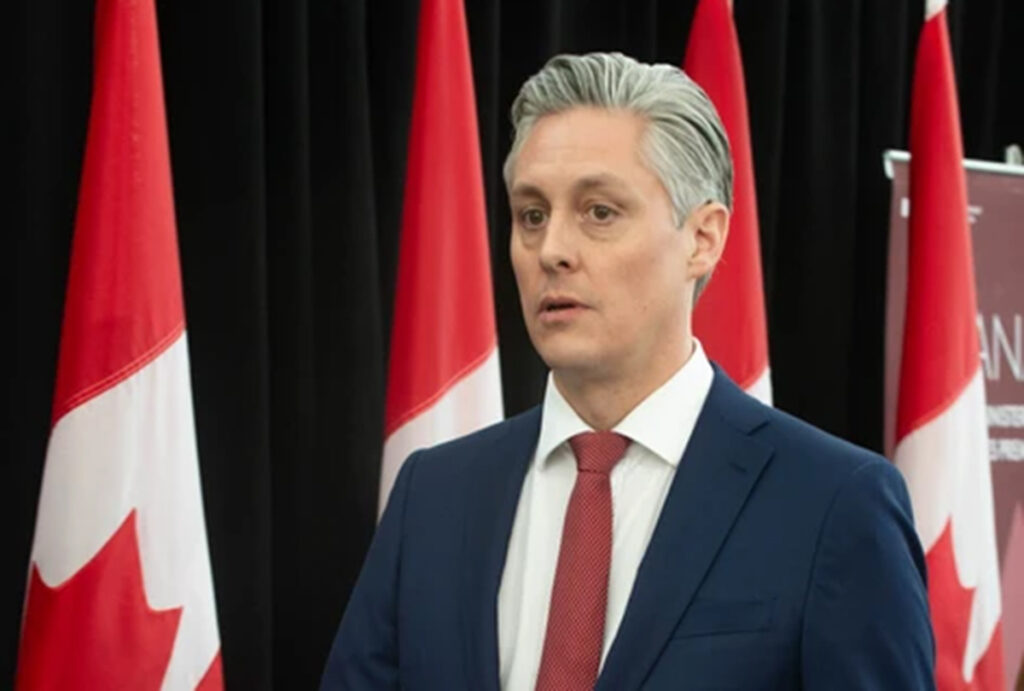
Norfthwest Territories’ Premier R.J. Simpson said he could eventually see ice breakers allowing exports of liquefied natural gas to Asian markets. Photo by Bryan Passifiume/Toronto Sun
Canada’s sudden focus on the Arctic’s security and natural resources has come at the right moment for Premier R.J. Simpson and the Northwest Territories.
The far northern region of about 45,000 people is losing its traditional important economic engines at a rapid clip. Diamond mining, the largest segment of the economy, is in decline with Rio Tinto Group closing its Diavik diamond mine this month and Burgundy Diamond Mines Ltd. laying off several hundred workers after halting part of its Ekati operations last year. Oil production is also set to end with Imperial Oil Ltd. announcing plans to shutter its century-old Norman Wells operation later this year.
But Simpson isn’t gloomy. Amid United States President Donald Trump’s threats to take Greenland, melting polar ice caps opening up new shipping routes, a desire by North Atlantic Treaty Organization countries to secure the Arctic and a growing appetite for a broad range of critical minerals, places such as the Northwest Territories are getting a surge of attention.
Earlier this month, Prime Minister Mark Carney visited the capital of Yellowknife to announce $32 billion to shore up Arctic defences. At the same time, the government has sent a series of northern road, port and electricity generation proposals to the Major Projects Office, an entity that helps secure financing for infrastructure projects and shepherds them through regulatory hurdles. These include the Mackenzie Valley Highway, an 800-kilometre road that would connect the towns of Yellowknife and Inuvik, as well as the Grays Bay Road and Port, a planned deep-water port on the Arctic Ocean.
“We’ve got the diamond mines winding down, Norman Wells down, and now people are saying, well, now what?” he said in a video interview. “Now they can see what is next and there’s something big on the horizon.”
Larger than California and Texas combined and extending from the Alberta border in the south to the Arctic Ocean, the Northwest Territories has experienced net economic decline over the past decade even as its population has remained steady. The territory was almost ignored under previous prime minister Justin Trudeau, Simpson said.
“We could not get Ottawa’s attention at all prior to this,” he said “There was very little interest in development, you know, petroleum development, mineral development, that’s been the feeling, and little interest in infrastructure investment.”

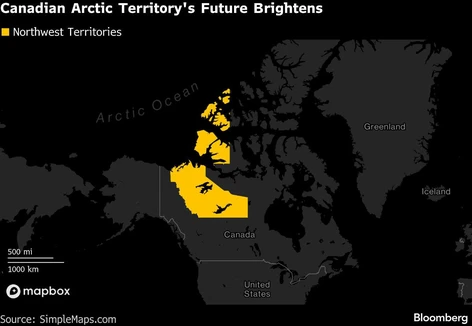
That attitude has changed under Carney, he said. The change in government has seen renewed engagement on streamlining regulations and increasing spending on infrastructure. Simpson is hopeful construction on Mackenzie Valley Highway could start by next year on the section of the road to Norman Wells, and the rest going all the way to the Arctic Ocean finished by 2032, he said.
With Imperial shutting its oil wells after years of dwindling production, the new highway will make future oil and gas drilling projects along the route less costly and could revive hydrocarbon production, including gas drilling in the Beaufort Sea. Currently, oil and gas drilling in those Arctic waters is banned under a nearly 10-year moratorium imposed by Trudeau. The premier recently asked Carney to lift the restriction, although he hasn’t yet received a response.
“The focus on the Arctic and Arctic security has shifted Canada’s eyes northward,” he said. “The announcements from the federal government have really got industry looking at us as well.”
Simpson said he could eventually see ice breakers allowing exports of liquefied natural gas to Asian markets, a project that would require buy-in from the Indigenous-owned Inuvialuit Regional Corp.
Beyond hydrocarbons, new mining opportunities are opening up to replace diamonds in the rush to secure resources critical for military needs and electronics. Some companies are exploring lithium production and the 70 per cent rise in the price of gold last year is revitalizing a formerly important source of income for the territory.
Still, much of the planned investment won’t happen immediately. There will be a gap between the loss of existing employers such as diamond mines and the start of new projects, meaning the territory’s population, that’s been steady for years, could decline for a period, he said. But that break may be needed. The region suffers from a serious housing shortage, with a current housing deficit of 1,700 to 2,700 homes, according to the NWT government.
“Our population will be growing, so we need to make land available for development,” he said. “We need to build houses and all of those things. So it’s more a concern of what do we do for the influx of people rather than the outflow of people.”
Bloomberg.com
Share This:























OPINION: The Iran War Energy Crisis is Just Getting Started: Bousso