


 CDN NEWS |
  US NEWS







The Alaska LNG project is the main rival for British Columbia’s natural gas export projects.
By Geoff Russ
By Resource Works
More News and Views From Resource Works Here
Alaska’s long discussed liquefied natural gas export plan is showing fresh signs of momentum, and industry watchers say it is a reminder that British Columbia’s head start in the Pacific LNG race is not guaranteed.
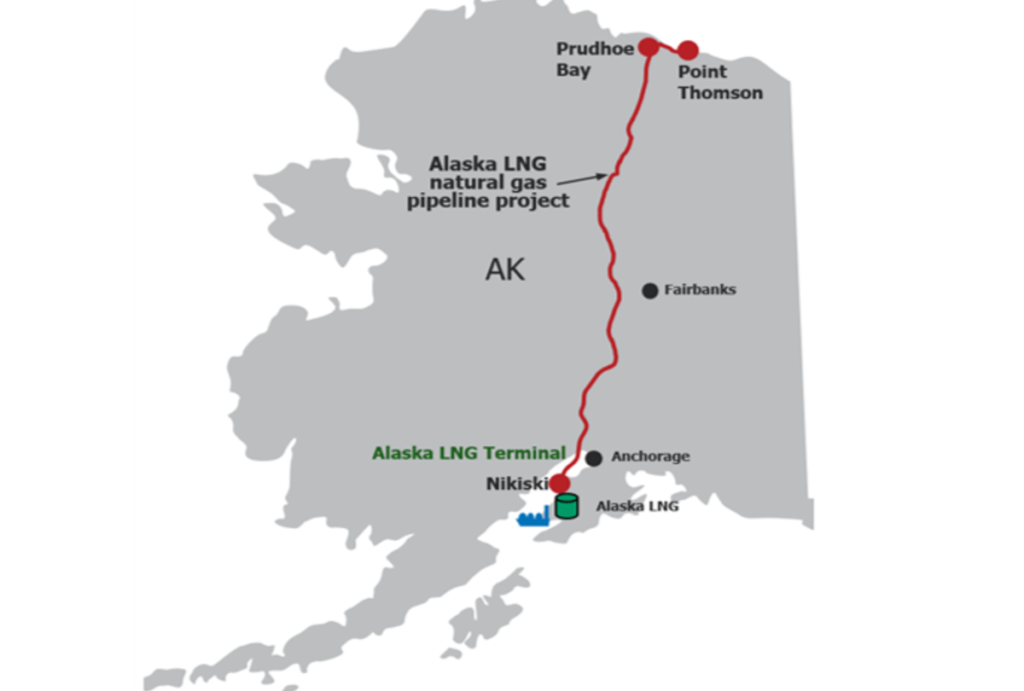
The proposed Alaska LNG project, priced at about US$44 billion, would move North Slope gas down a pipeline of roughly 800 miles to a liquefaction terminal for export to Asian customers. U.S. Interior Secretary Doug Burgum said last fall that a key engineering and cost assessment for the pipeline, known as a front end engineering and design study, is expected to be completed in December.
“There’s a lot of optimism about the Alaska LNG project, and the FEED study should be coming out in December of this year, and I think that we’re going to see a lot of interest in that project,” Burgum said at an event hosted by the American Petroleum Institute.
Commercial momentum and key partnerships
The project’s developer, Glenfarne Group, has been working to convert years of planning into commercial commitments.
In November, oilfield services firm Baker Hughes said it would supply main refrigerant compressors for the proposed LNG terminal and provide power generation equipment for a gas treatment plant on the North Slope, and it also committed to a strategic investment in the project.
“With someone like Baker Hughes coming in it’s a stamp of approval,” Brendan Duval, chief executive of Glenfarne, told Reuters.
A Baker Hughes statement said the agreements were announced at a ceremony in Washington, D.C., attended by Burgum and U.S. Energy Secretary Chris Wright. Duval said Baker Hughes’ participation reflected “momentum” and the project’s ability to attract partners.


A phased approach to export capacity
Glenfarne has described Alaska LNG as a two phase build. It has said Phase One would focus on a large diameter pipeline intended to meet Alaska’s domestic energy needs first, with a later phase adding the LNG terminal and related infrastructure, targeting 20 million tonnes per annum of export capacity and a final investment decision in late 2026.
In late January, Glenfarne said it had signed a series of preliminary agreements with pipeline manufacturers and builders, and with gas suppliers and buyers, in order to set the stage for potential investors and lenders. In a separate statement, the company said it had executed gas sales precedent agreements with ExxonMobil and Hilcorp Alaska, and signed a non binding letter of intent with ENSTAR Natural Gas Company for a 30 year supply of gas.
The latest announcements drew praise from Alaska’s government. Gov. Mike Dunleavy called the project “closer to reality than ever” in his State of the State address, while state lawmakers cautioned publicly that key pieces remain non-binding and major steps are still required before construction can proceed.
The threat to B.C.’s Pacific advantage
The Alaska push matters for Canada because B.C. is trying to lock in long term Asian demand with projects now in different stages of development. LNG Canada has already begun shipping from Kitimat, and the province has pitched its northern coast as a direct Pacific corridor to energy hungry markets such as Japan and South Korea.
British Columbia Premier David Eby has argued that reliability is Canada’s edge, even as U.S. President Donald Trump promotes Alaska LNG as part of a broader drive to expand American fossil fuel exports.
“If you are a government in Asia looking for reliable energy sources that you can count on and a partner that you can count on, that isn’t suddenly going to cut off your access to energy, that isn’t suddenly going to massively increase the tariffs on the energy or taxes on the energy that you’re purchasing, then nobody, nobody would be looking at the United States right now,” Eby said last summer while announcing provincial support for Cedar LNG infrastructure.
Navigating hurdles and maintaining the lead
Cedar LNG, a floating export terminal backed by the Haisla Nation and Pembina Pipeline Corp., is scheduled to come online in late 2028.
Even with recent progress, Alaska LNG still faces hurdles. Reuters has reported that potential Asian investors have raised concerns about the project’s cost, given Alaska’s harsh climate and the scale of infrastructure required.
But the new equipment deals, engineering work and supplier agreements are sharpening competitive pressure on Canada’s West Coast buildout. For British Columbia, the Pacific advantage is real, but it will only last if projects keep moving from announcements to steel in the ground.
Geoff Russ is a writer for Resource Works, a non-partisan organization that champions responsible resource development in British Columbia and Canada. Reach Geoff at [email protected].
Share This:






















INSIGHT: Canada’s Natural Resource Sector is at the Heart of the Government’s ‘Export & Diversification’ Plan