


 CDN NEWS |
  US NEWS







Chris Varcoe: Alberta aims to double its output, but a big question for the industry and politicians is where that oil will go
This Article & More by Chris Varcoe Here
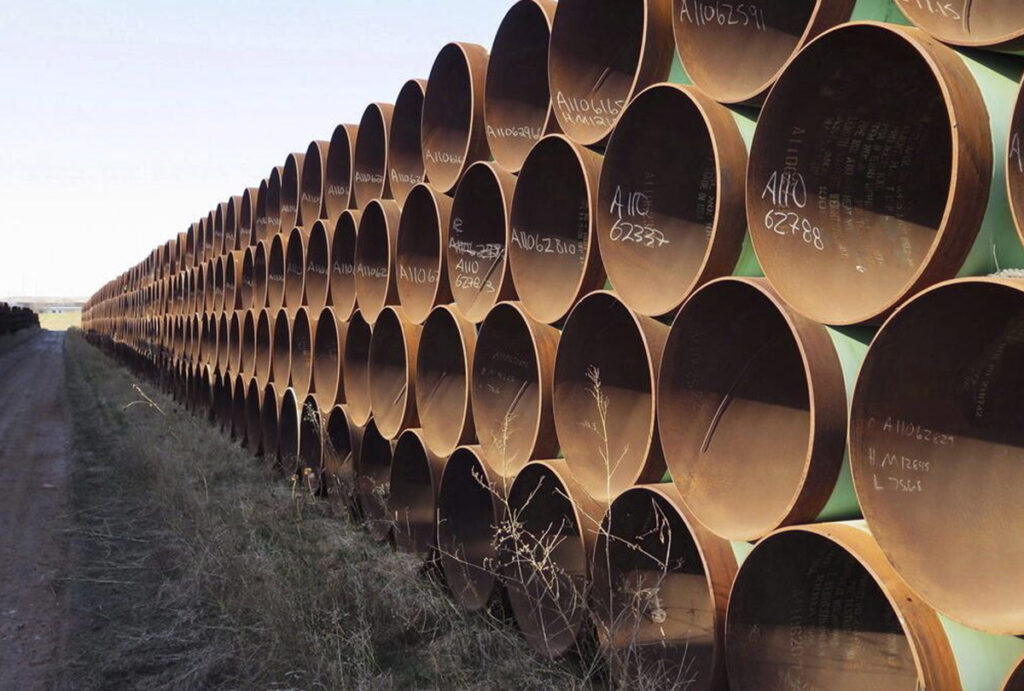
Look west or southward bound? This isn’t the title of a TV sitcom, but a question facing Canadian politicians and oil industry leaders.
As western Canadian oil output ramps up and is expected to fill export pipelines, where should capacity from a new oil artery point to, and what projects will be built first?
Should they extend south, such as through a revised Keystone XL-type pipeline or another development that ships additional crude to the United States, where Canada is already the largest foreign supplier of energy?
Or should it go to the Pacific Coast, as Alberta is proposing with a new bitumen line, offering enhanced access to international customers and greater market diversification?
And how will this play out against the backdrop of trade talks with the United States, a war in the Middle East and a new federal-provincial energy pact?
“You obviously can’t fill both of them at the same time,” said Heather Exner-Pirot, director of natural resources, energy and environment at the Macdonald-Laurier Institute.
“Strategically, especially at this time in the Iran crisis, you’re seeing how important it is to actually get barrels to tidewater, to get them to different allies . . . But if 2026 wasn’t the time when Canada thought about what is being an energy superpower (about) — and that absolutely means getting your own barrels to tidewater, in your own tidewater — it feels to me a bit of a generational fumble here.”
Alberta’s energy sector has been setting oil output records and existing pipeline systems in Western Canada are filling up, less than two years after the Trans Mountain expansion project was completed.
On Wednesday, Trans Mountain Corp. announced an open season to gauge shipper interest in boosting the contracted capacity available on its network. The federal Crown corporation also plans to optimize its system, adding 300,000 barrels per day (bpd) of new capacity by the end of 2028 and increasing the industry’s ability to send oil to international customers.
Calgary-based Enbridge has previously announced plans to expand its Mainline system by up to 400,000 bpd around the 2028 time frame, increasing Canadian oil shipments to the U.S. Midwest and Gulf Coast.
And South Bow, also headquartered in Calgary, recently launched an open season for transportation service on a project called Prairie Connector, using pre-invested infrastructure in Canada (reports indicate it was built for the Keystone XL project) that could connect to U.S. systems.
Analysts expect the project will connect with a new 550,000 bpd capacity line proposed by U.S. infrastructure firm Bridger Pipeline LLC, shipping oil from the Canadian border to Guernsey, Wyo.
Regardless of which project is built, more pipeline capacity will be required.
A report by S&P Global Energy estimates western Canadian crude supply for export last year averaged 4.6 million bpd, leaving just over 300,000 bpd of surplus capacity. By 2030, total supply from the region could top 5.2 million bpd.
“Through the winter of this year, the system got quite full,” said Kevin Birn, chief analyst of Canadian oil markets at S&P Global.
“By end of next year, when we go back into that winter, which is the peak production cycle, the system should be full.”
Asked Wednesday which pipeline she wants to move forward first, Alberta Premier Danielle Smith pointed out the province aims to double its oil production.
“I’d love to see all of them go ahead,” she told journalists.



On the timing front, Smith believes expanding capacity on Enbridge’s Mainline project will likely proceed first, followed by the Trans Mountain initiatives.
As for new pipelines, the premier said the “South Bow-Bridger project” is further along than Alberta’s proposed line to the Pacific Coast. The province expects to submit its pipeline plan to the federal Major Projects Office by the end of June.
“If it turns out that having partners in the U.S. allows more of that product to get to the Gulf Coast, so that it can either be used in the States or exported internationally, I think that benefits us,” Smith added.
“If it takes a little bit longer to get the West Coast pipeline, just on the basis that we’re really just getting started, that’s going to supercharge our ability to service that market.”
Timing and politics are also important.
Ottawa is preparing for a review of the Canada-United States-Mexico Agreement (CUSMA) this year, and U.S. President Donald Trump’s long-standing support to see Keystone XL built could play a part in trade talks.
“Keystone XL and the energy security it would provide the United States has always been one of the cards that Canada has in our deck,” Calgary MP Corey Hogan, parliamentary secretary to federal Natural Resources Minister Tim Hodgson, told CTV this week.
“As we start thinking about some of the exposed industries and some of those that are really being hit hard with tariffs, we have got to have things to negotiate with — and energy is one of those things.”
Where does that leave the oil sector, which will have to sign shipping commitments to see projects advance?
A statement by Canadian Association of Petroleum Producers CEO Lisa Baiton said the group is “pipeline-agnostic.”
“You need both,” said Adam Waterous, executive chair of Strathcona Resources, a Calgary-based petroleum producer.
“In some respects, the industry has a responsibility to support pipelines south, to support the prime minister in his negotiations with the United States,” he said.
“But at the same time, the industry certainly wants to diversify . . . If there’s incremental oil going to the United States, it’s going to have to be offset with more oil going to the West Coast.”
A new report by RBN Energy points out that Canadian oil output is increasing, but there’s little incremental demand in U.S. Midwest refineries.
Given the time it took to build the Trans Mountain expansion, it’s likely Canadian heavy crude takes “the path of least resistance” and ultimately ends up in the Gulf Coast, which has spare capacity, while pipeline companies can use existing infrastructure, said Rusty Braziel, executive chair of RBN Energy.
As for timing, the reality is projects moving oil south can be built sooner and cost less than a greenfield pipeline going west, offering lower transportation costs to producers, added Tamarack Valley Energy CEO Brian Schmidt.
“They both are valuable, they’re both important. But (U.S. projects) give us some shorter-term relief on the system,” he said Thursday.
“That can take the edge off here, because we’re going to hit capacity pretty soon.”
Chris Varcoe is a Calgary Herald columnist.
[email protected]
Share This:






















On The Verge: Energy Sector Primed for New Wave of Growth – ATB Economics