


 CDN NEWS |
  US NEWS







From lowering emissions in their operations to groundbreaking electrification, BC LNG is leading the way.
By Geoff Russ
By Resource Works
More News and Views From Resource Works Here
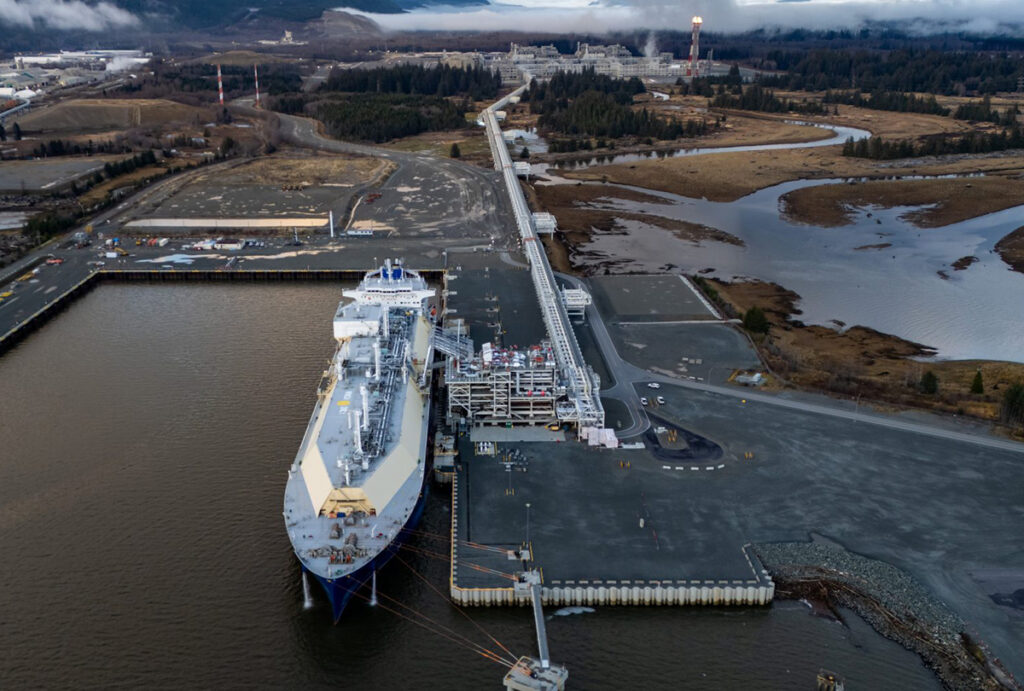
While Canada wrestles with a productivity slump and a housing economy shaped by capital flows, British Columbia’s liquefied natural gas buildout is emerging as an unlikely bright spot for applied innovation, from electrified liquefaction to Indigenous majority ownership and new approaches to cutting upstream emissions.
A York University analysis of Canada’s lagging innovation performance argues governments talk plenty about spending, and too little about how to generate the growth that sustains social programs, warning that Canada often confuses research activity with innovation that is deployed, adopted and scaled.
Housing analyst John Pasalis has made a similar point in a different file, arguing Canada has built an economy where wealth is too often made by owning homes and waiting for prices to rise rather than inventing or building, an observation that has landed as governments promise to “build, baby, build” their way out of affordability.
Electrifying the export model
By contrast, the West Coast is showing what modern, export oriented, capital intensive construction looks like in Canada when technology, project design and regulation meet global market pull.
At Woodfibre LNG near Squamish, the project has been designed around electric drive compressors powered by B.C.’s hydroelectric grid, replacing the gas turbine model common in LNG and targeting a carbon intensity of about 0.04 tonnes of CO2e per tonne of LNG produced, far below the global average cited by the Oxford Institute for Energy Studies and below B.C.’s regulatory benchmark.
The company says the electrified design alone avoids roughly 230,470 tonnes of CO2e a year compared with a gas fired plant, and it plans to use local, nature based carbon offsets for residual emissions as it aims for net zero operations by 2027.



In Kitimat, Cedar LNG reached a positive final investment decision in June 2024 on a floating LNG facility designed for 3.3 million tonnes per year and powered by renewable electricity from BC Hydro, a configuration its backers describe as among the lowest emitting LNG facilities in the world.
Upstream innovation and comparative advantage
Cedar is majority owned by the Haisla Nation at 50.1 per cent, with Pembina holding 49.9 per cent, a structure the partners have framed as a model for economic participation.
The buildout is also forcing innovation in upstream emissions control, where the Pembina Institute says the B.C. Montney can pursue two main decarbonization pathways for combustion sources, electrifying industrial facilities where transmission access is favourable and deploying large scale carbon capture and storage in areas better suited to it, with the potential to cut upstream gas emissions by 2 to 3 megatonnes of CO2e per year.
Industry advocates argue B.C. LNG’s comparative advantage is increasingly technical. The Canadian Energy Centre points to colder ambient temperatures that can reduce energy requirements for liquefaction, shorter shipping distances to Asia from the West Coast, the use of hydropower for operations, and tighter methane controls in Western Canada as factors that can lower lifecycle emissions compared with other supply.
Global demand and local credibility
Those claims are contested by some climate critics, including voices who have argued approvals such as Cedar LNG do not align with B.C.’s climate goals.
Still, business groups are leaning into the argument that cleaner production matters if global demand persists. A Public Policy Forum report produced with the Canadian Chamber of Commerce, drawing on analysis by Navius Research, says Canadian LNG and oil exports are likely to displace higher emitting alternatives in key markets, potentially reducing global emissions, depending on what they replace.
In northeastern B.C., the gas-rich Montney region has pushed back against their economy and contributions being misrepresented in public debate, with residents filing a complaint over what they say were misleading images used in anti fracking advocacy, a fight they frame as part of earning credibility for the sector’s environmental and technical improvements.
Geoff Russ is a writer for Resource Works, a non-partisan organization that champions responsible resource development in British Columbia and Canada. Reach Geoff at [email protected].
Share This:





















