


 CDN NEWS |
  US NEWS







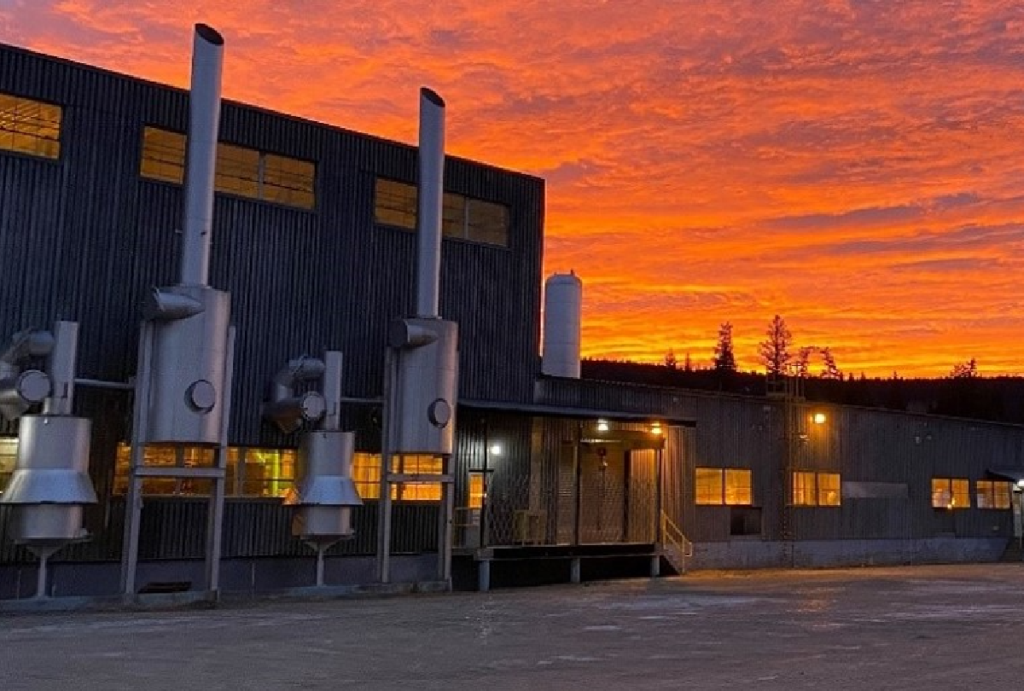
The Canada Energy Regulator recommends approval of the Sunrise Expansion Program, moving B.C. closer to solving its pipeline bottlenecks and meeting global LNG demand.
The Canada Energy Regulator (CER) has unanimously recommended approval of Westcoast Energy’s Sunrise Expansion Program, marking a critical regulatory milestone that transforms years of discussion about British Columbia’s pipeline capacity constraints into concrete action toward LNG export readiness.
“This project is a well-considered, modest expansion of an existing pipeline corridor that delivers outsized benefits for Canadians,” Resource Works CEO Stewart Muir said in response to the Jan. 30 announcement.
“It will enhance energy security, bolster Canada’s competitive position in natural gas, and drive economic growth—all while upholding high environmental and safety standards.”
From abstract to tangible
The CER’s recommendation is a pivotal shift from abstract concerns about bottlenecks to a tangible permitting achievement.
The project will increase natural gas transmission capacity on Enbridge’s T-South system by approximately 300 million cubic feet per day—a 17 per cent boost. It involves 11 pipeline loops totalling 139 kilometres of 42-inch diameter natural gas pipeline extending southwest from Chetwynd to the Canada-U.S. border near Sumas, B.C.
This additional capacity directly addresses both current demand and the upcoming needs of the Woodfibre LNG export facility, which begins operations in 2027.

Energy security for Canadians
“This project will help ensure that Canadian homes stay warm and industries stay running even during peak winter conditions or unexpected supply disruptions,” Muir wrote in his May 2025 submission to the CER, which formed part of the 87 letters of comment considered by the commission.
Natural gas currently provides roughly one-third of B.C.’s total energy needs. The additional capacity offers more secure energy for hundreds of thousands of households and acts as a buffer against price spikes during extreme weather events.
Leveraging Canada’s competitive edge
The approval also reinforces Canada’s position as a reliable natural gas supplier in an increasingly competitive global market.
“In a competitive global energy landscape, infrastructure like Sunrise is vital for Canada to remain a reliable supplier and to seize economic opportunities,” Muir noted.
With abundant reserves in the Montney formation and a skilled workforce, the expansion allows Canada to move responsibly produced gas—subject to stringent methane regulations and carbon pricing—to markets efficiently.



A model for the ‘midstream’
For Muir, the decision represents a critical piece of the larger LNG puzzle: the “midstream.”
“To build LNG, the public increasingly understands that three things have to work together,” Muir explained. “First, the upstream—where natural gas is produced. Second, the midstream—the pipelines and compression that move gas from where it’s produced to where it’s needed. Third, the coastal industrial facilities.”
“This decision is about the midstream. And relatively speaking, it has been a model process—transparent, rigorous, and open to public participation.”
The CER’s recommendation follows a 15-month hearing process that included input from 40 Indigenous communities. The commission attached 47 binding conditions to its recommendation, covering construction practices, safety standards and Indigenous consultation.
Asia’s structural pull
The approval arrives as Canadian LNG is increasingly positioned to meet structural Asian demand.
“Natural gas is now following the same quiet arc as Canadian heavy oil: Asia is pulling, and Canada is finally in position to respond,” Muir observed.
He noted that recent diplomatic signals, such as the memorandum of understanding between Prime Minister Mark Carney and President Xi Jinping, reinforce this positioning.
“For Canada, the payoff isn’t ‘selling gas to China.’ It’s leverage,” Muir noted. “West-coast LNG stops being a regional aspiration and starts looking like what it actually is: a national economic asset that bypasses U.S. chokepoints.”
What comes next
The recommendation now goes to the Governor in Council for final review. The commission delivered its finding ahead of the Feb. 12, 2026, legislated deadline.
For Resource Works, the decision is a validation of the case for “made-in-Canada solutions.”
“As U.S. shale gas production declines, Canada must act now to solidify its role as a global energy leader,” Muir wrote in his original submission. With the CER’s recommendation, that opportunity moves one step closer to reality.
Share This:





















