CDN NEWS |
  US NEWS









Dallas Smith cuts through the noise on the Power Struggle podcast, arguing that pragmatism—not performative activism—is the path to Indigenous prosperity
By Stewart Muir
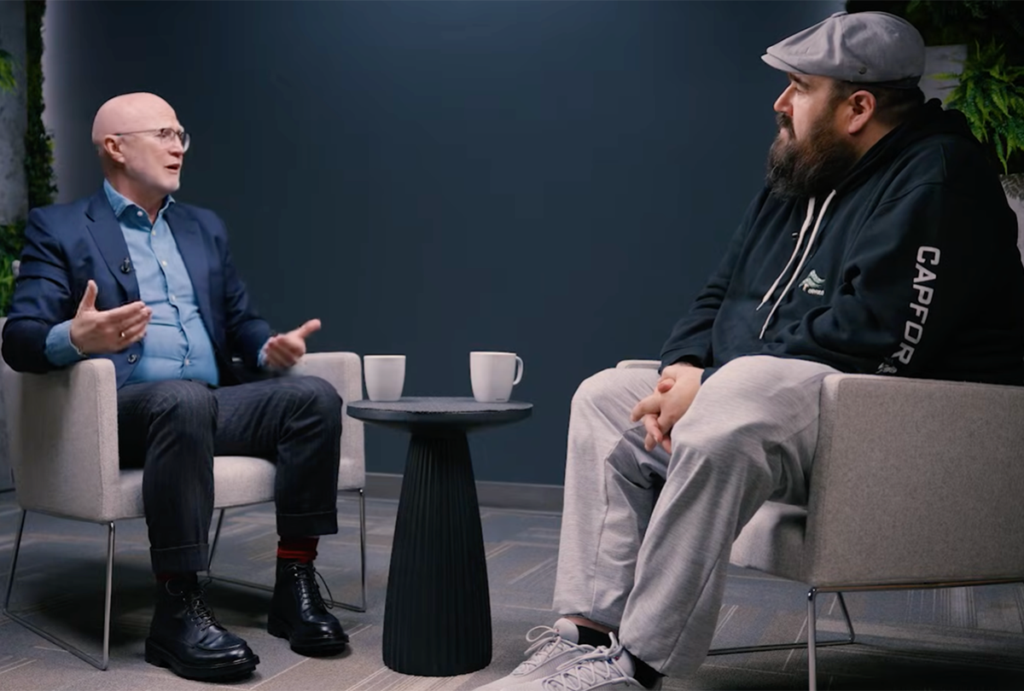
Stewart Muir (left) and Dallas Smith
By Resource Works
More News and Views From Resource Works Here
In the polarized world of British Columbia politics, it is rare to find a voice that cuts through the noise with as much clarity and pragmatic force as Dallas Smith.
As a First Nations leader and the CEO of the Nanwakolas Council, Smith has spent decades navigating the complex intersection of environmental stewardship, government bureaucracy and the undeniable necessity of economic development.
I recently sat down with Smith for an episode of the Power Struggle podcast. We discussed everything from marine planning to the future of energy infrastructure. But what struck me most was his unvarnished take on the reality of Indigenous struggles in B.C.—and the specific roadmap required to turn those struggles into success stories.
The ‘Res Dog Walker’ reality
We began with a topic that tends to raise eyebrows: the name of his own podcast, Res Dog Walkers.
On the surface, it sounds whimsical. However, the origin is rooted in a biting critique of the disconnect between urban environmental activism and the economic realities of coastal communities.
The backdrop is the federal government’s move to phase out salmon farming in the Discovery Islands—a decision that resulted in a staggering 40 per cent reduction in Indigenous revenues from the sector.
“There’s an activist who said that First Nations people should get jobs walking dogs to fill in the income loss from salmon farming,” Smith told me, the incredulity still evident in his voice. “These are $120,000-a-year family-supporting jobs. This activist had the audacity to say our people should be walking dogs to fill that income gap.”
Conservation needs an economic engine
This anecdote encapsulates the central tension of Smith’s career. He rose to prominence through his work protecting the Great Bear Rainforest—a landmark achievement that protected 3.1 million hectares.
“But then we realized we needed to protect the existing forest industry,” Smith recalled.
Conservation without an economic engine does not put food on the table. While Smith worked with Prime Minister Justin Trudeau to build a $200-million stewardship fund, the victory was tempered by realities on the ground.

“When we got home from that discussion, I went for a tour of some of our communities and we still have substandard housing,” Smith said. “We still have social problems that only own-source revenue can fix.”
The pipeline conversation
This drive for “own-source revenue”—money generated by Nations themselves rather than government transfers—has led Smith to take pragmatic positions on controversial energy projects, including the Trans Mountain pipeline expansion (TMX).
“TMX showed us that we can get through some of those challenges,” he explained. “I actually was very supportive of TMX, along with many other First Nations who bought into the opportunities to have a management role in the pipeline.”
With Alberta continuing to advocate for new market access, Smith suggests that behind closed doors, the conversation about future pipelines is far more practical than the media narrative suggests.
“There’s always a First Nations community saying, ‘OK, I understand the concerns… First, can we mitigate them to make sure that they’re negligible? Second, what is the benefit that may come from that?’”
For Smith, these are the “pragmatic discussions that are happening that eventually need to be part of the centre stage.”
A place to come home to
The ultimate goal is not just wealth; it is cultural survival.
Smith pointed to his own community, the Tlowitsis Nation. In the 1960s, they were effectively shut down and dispersed. For decades, they were a Nation without a home. Now, thanks to revenues generated through business partnerships in sectors like aquaculture and forestry, they are building a new village called Nunaguas.
“We’ve built our first 10 houses. We actually have elders moving in in January who haven’t lived in a Tlowitsis Nation home since 1968,” Smith shared.
Nunaguas is a Kwakwaka’wakw word for “a place to come home to.” The Nation plans to build 115 houses over the next five years, funded mostly through own-source revenue.
“This takes us off the teat of dependency from the government,” Smith said. “This community is going to be there forever.”
In listening to Dallas Smith, the path forward becomes clear. It isn’t found in performative activism. It is found in the hard work of building economic partnerships and securing the financial independence necessary to bring people home.
Watch the video on Power Struggle
- Power Struggle audio and transcript
- Power Struggle website
- Dallas Smith on LinedIn
- Stewart Muir on X
- Stewart Muir on LinkedIn
Power Struggle on social media:
- Power Struggle on LinkedIn
- Power Struggle on Instagram
- Power Struggle on Facebook
- Power Struggle on X
Share This: