CDN NEWS |
  US NEWS







By Julio Mejía and Elmira Aliakbari
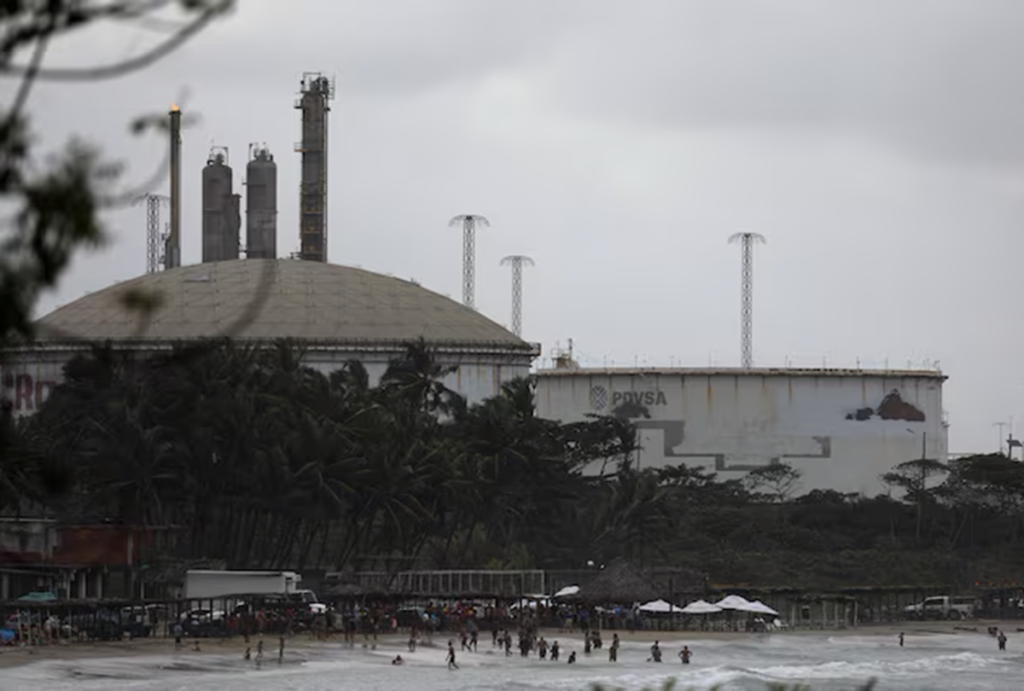
Less than a week after Nicolás Maduro’s ouster, the Trump administration met with oil company executives to encourage investment and bring Venezuela’s oil production back online. In response, Prime Minister Carney pointed to the federal government’s recent deal with Alberta (known as the Memorandum of Understanding or MOU) as a safeguard for Canada’s energy competitiveness.
But in reality, the deal does not remove all the barriers plaguing Canada’s energy sector and instead adds new sources of uncertainty because it’s long on promises yet short on concrete commitments.
Venezuela holds vast natural gas resources and the world’s largest proven oil reserves, exceeding the holdings of Canada, the United States and Mexico combined. At peak production in 1998, the year before the socialist regime came to power, Venezuela became the largest supplier of foreign oil to the U.S. However, as the dictatorship plunged Venezuela’s oil and gas industry into crisis and production collapsed, Canada steadily filled the void, becoming America’s top foreign oil supplier. Today, Canada’s energy sector relies on the U.S. market, with more than 95 per cent of oil and natural gas exports sent south of the border in 2024 (the latest year of available data).
In his recent meeting with CEOs from Exxon Mobil, Chevron, Shell, Conoco Phillips, Halliburton and other industry players, President Trump pushed a plan for “big oil” to invest at least US$100 billion and boost oil production in Venezuela. Again, in response the Carney government pointed to its deal with Alberta.



But what does the deal actually do? Take pipelines, for example. To increase exports to Asia and decrease reliance on the U.S. market, the Alberta government wants a new oil pipeline from the oilsands to British Columbia’s coast. But the deal does not guarantee approval for such a project. Instead, it commits only to form a committee to determine the conditions Alberta must meet before it can submit a pipeline application to the Carney government’s Major Projects Office. In other words, rather than clear a path for project approval, the deal adds a new bureaucratic maze, with potential investors facing uncertainty at every stage.
Moreover, consider the regulatory burdens that already discourage investment in energy infrastructure projects. Federal Bill C-48, for example, bans large oil tankers from docking at ports along B.C.’s northwest coast and undermines the case for a Pacific-bound pipeline. Notably, this legislation does not (and cannot) restrict oil tanker traffic travelling to and from U.S. terminals in Alaska. In other words, it hurts the Canadian energy sector, not the U.S. sector.
Rather than eliminating this barrier, the deal only promises to adjust Bill C-48 if an oil pipeline attracts private investors and if it’s approved for fast-tracking by the Major Projects Office. It’s a “chicken-or-egg” dilemma—without Pacific port access, the Alberta-to-B.C. pipeline can’t attract investors, but Ottawa won’t approve the project until the pipeline secures private investment.
Under the deal, the Carney government also promises to scrap the CO2 emissions cap imposed exclusively on the oil and gas sector. This is good news—the cap was a direct deterrent to investment, with multiple studies noting it would effectively force companies to cut oil and gas production. However, also under the deal, the Alberta government must implement a methane-reduction framework costing the industry billions of dollars and secure a binding deal with major oil producers in the province to implement carbon capture and sequestration. Scaling up this technology, which traps and stores CO2 underground, may cost an estimated C$65 billion, evenly split between government and industry.
Finally, while details are not yet final, the deal signals an increase in Alberta’s industrial carbon tax to around C$130 per tonne of CO2 emitted—up 37 per cent from the current C$95 per tonne. This will raise the cost of producing, processing and transporting oil and gas, pushing investment to jurisdictions without such barriers, including the U.S. and potentially Venezuela.
If Ottawa is serious about Canada’s ability to compete on the world stage, it must eliminate barriers to investment in the energy sector. The Ottawa-Alberta deal is far from sufficient to keep Canada competitive, particularly as Venezuela reemerges as a major energy player.
Share This: