


 CDN NEWS |
  US NEWS







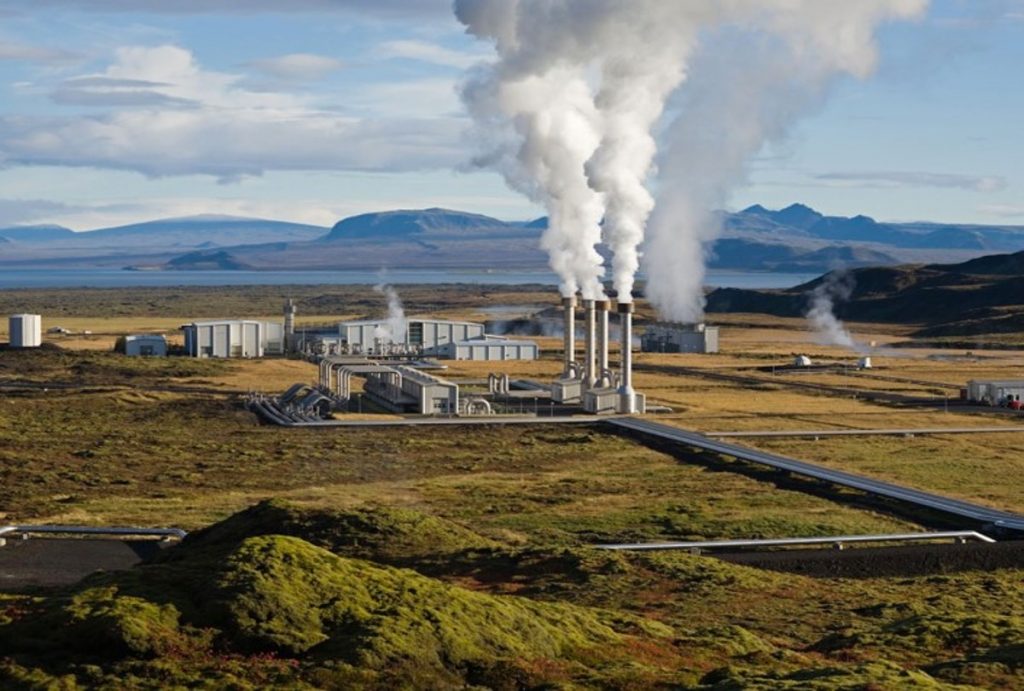
By Yogi Schulz
The promise of geothermal electricity generation has been elusive for many years. That’s changing. The appeal is continuous electricity generation and no greenhouse gas (GHG) emissions. The impediments include:
- A lack of geological resources near electricity-consuming regions.
- Limitations of well-drilling technology.
The following technology developments have created a new capability that is likely to accelerate the development of geothermal resources:
- The ability to fracture underground formations to improve permeability.
- The ability to drill highly accurate horizontal wells.
- The development of enhanced heat transfer fluids.
Alberta offers multiple advantages that are essential to the development of a thriving geothermal electricity generation industry.
Geothermal energy advantages
Geothermal energy offers these advantages over other sources of energy for electricity generation:
- One of the few renewable energy sources that is always available, unlike solar and wind electricity generation.
- Produces hardly any GHG emissions, unlike coal- and natural gas-fired electricity generation.
- Operates at high capacity factors, unlike solar and wind electricity generation.
- Requires only a small land footprint, unlike solar and hydroelectricity generation.
- Requires little fresh water, unlike hydroelectricity generation.
The following trends have created a new impetus to develop more geothermal resources:
- Increasing global electricity demand, as per capita energy consumption, continues to rise.
- A rapid increase in high-availability or continuous electricity demand to power AI data centres.
- Widespread insistence that all new electricity generation cannot produce GHG emissions in an effort to address climate change.
Global geothermal electricity generation
Currently, global geothermal electricity generation is so small that it’s included in the Other category, as illustrated in the chart below.
The Geysers in California, United States, is the world’s largest geothermal power station, with a nameplate capacity of 1,600 MW, generates approximately 6,500 gigawatt-hours (GWh) a year. By comparison, in 2024, Alberta generated 88,800 GWh, including an estimated 7.5 GWh of geothermal electricity.
Other significant facilities operate in Indonesia, Italy, Mexico and the United States.
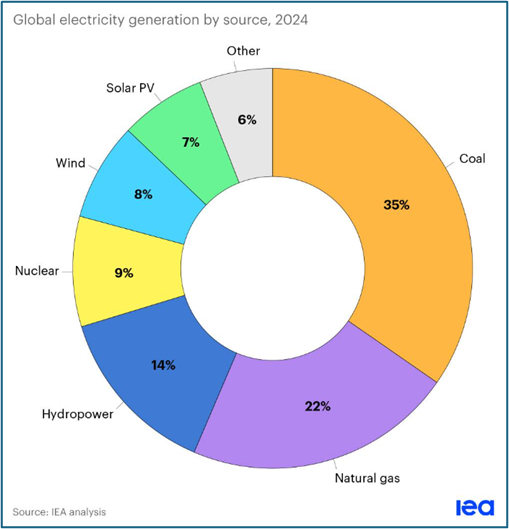
Source: Global electricity generation by source, IEA, 2024
Global regions of geothermal potential
The map below illustrates the global regions of geothermal potential. Such areas have the following characteristics:
- High temperature in excess of 150 °C. A reservoir water temperature of at least 100 °C is required to provide sufficient heat for profitable geothermal electricity production.
- The reservoir temperature occurs above a depth of 5 kilometres. While there are regions with high temperatures below 5 kilometres, this depth is widely considered the limit of acceptable drilling costs.
Many regions with geothermal potential are located at the intersection of two tectonic plates.
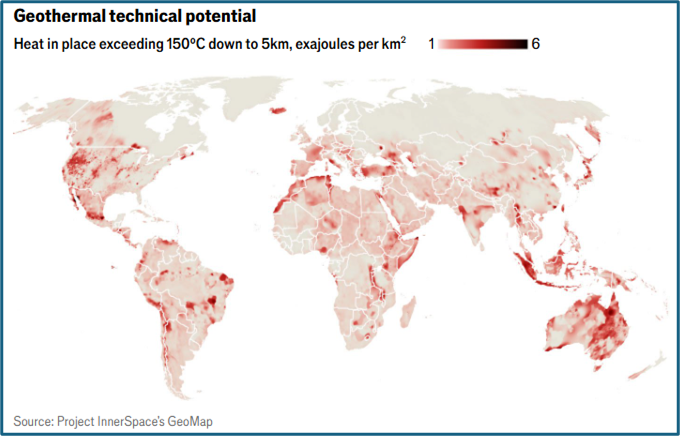


Source: Geothermal’s time has finally come, Economist, November 18, 2025
As nations continue to advance efforts to address climate change, diversify their energy sources, and avoid rising electricity costs for businesses and consumers, interest in geothermal electricity generation, where feasible, will continue to grow.
Cost of geothermal electricity generation
The cost of geothermal electricity generation compares favourably with other energy sources, as illustrated in the chart below. The limited public and observable data available for new-build geothermal electricity generation account for the wide range of costs shown in the chart.
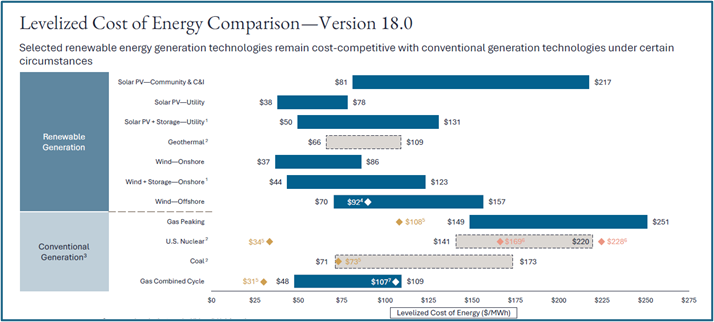
Source: Lazard’s Levelized Cost of Energy+ (LCOE+), Version 18.0, June 2025
The following factors influence the LCOE cost range for specific geothermal electricity generation locations:
- The temperature of the available subsurface water sources. Higher temperatures lead to lower operating costs.
- The depth of the available subsurface water sources. Deeper water sources entail higher capital and operating costs.
- The cost of materials and labour varies by geographic location of the geothermal electricity generation. Lower costs occur in more populated areas with more infrastructure.
- The distance between electricity generation and consumption determines the cost of high-voltage transmission. Shorter is cheaper.
Alberta’s potential for geothermal development
The maps below illustrate Alberta’s regions with potential for geothermal electricity generation development. The most promising region is in west-central Alberta, close to the foothills.
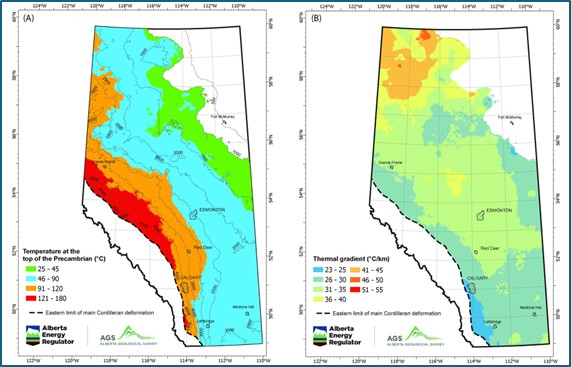
Source: Emerging Resources – Geothermal, AER, 2025
Alberta offers the following advantages that are essential to a successful geothermal electricity generation industry:
- Extensive sedimentary basins, especially the Leduc and Swan Hills formations, hold significant heat resources.
- Readily available innovative drilling technologies.
- A highly developed community of oil and gas development skills.
- A robust subsurface dataset.
- Well-developed infrastructure.
Alberta’s potential for geothermal development
Even though Alberta produces significant amounts of crude oil and natural gas, adding geothermal as an energy source to the mix for generating electricity:
- Reduces overall GHG emissions intensity.
- Capitalizes resources we can’t sell to anyone.
- Contributes to keeping electricity prices low.
- Adds resiliency to the electricity system.
The following geothermal electricity projects are currently in various stages of development in Alberta:
- FutEra Power Corp. – Swan Hills Geothermal: Canada’s first commercial hybrid plant that relies on geothermal and natural gas to produce 21 MW, utilizing hot produced water from crude oil production operations.
- E2E Energy Solutions – Rainbow Lake: A pilot of their patent-pending EGRRS technology to supply geothermal heat and 50-100 MW electricity to the town of Rainbow Lake.
- Eavor Technologies Inc. – Eavor-Lite: A closed-loop, 2.4 km deep demonstration project near Rocky Mountain House showcasing advanced geothermal technology for an innovative closed-loop system to generate baseload electricity.
- Novus Earth – Latitude 53: A closed-loop, 4 km deep geothermal system near Hinton, intended for 3.1 MW of electricity, direct heat and hydroponic aquaculture. E2E Energy Solutions has joined as a partner.
- Terrapin Geothermics – Alberta No. 1: A conventional geothermal project planned south of Grande Prairie, aiming for 10 MW of electricity and district heating, utilizing deep geothermal wells.
Considering Alberta’s advantages for geothermal electricity generation and the progress of early adopters, geothermal will become increasingly important to electricity generation in Alberta.
Yogi Schulz has over 40 years of experience in information technology in various industries. He writes for Engineering.com, EnergyNow.ca, EnergyNow.com and other trade publications. Yogi works extensively in the petroleum industry to select and implement financial, production revenue accounting, land & contracts, and geotechnical systems. He manages projects that arise from changes in business requirements, the need to leverage technology opportunities, and mergers. His specialties include IT strategy, web strategy, and systems project management.
Share This:





















INSIGHT: Canada’s Natural Resource Sector is at the Heart of the Government’s ‘Export & Diversification’ Plan