


 CDN NEWS |
  US NEWS







Global carriers are watching British Columbia’s Indigenous-led LNG projects gather pace, strengthen investor confidence and open new shipping routes to nations seeking long-term reliable energy supply.
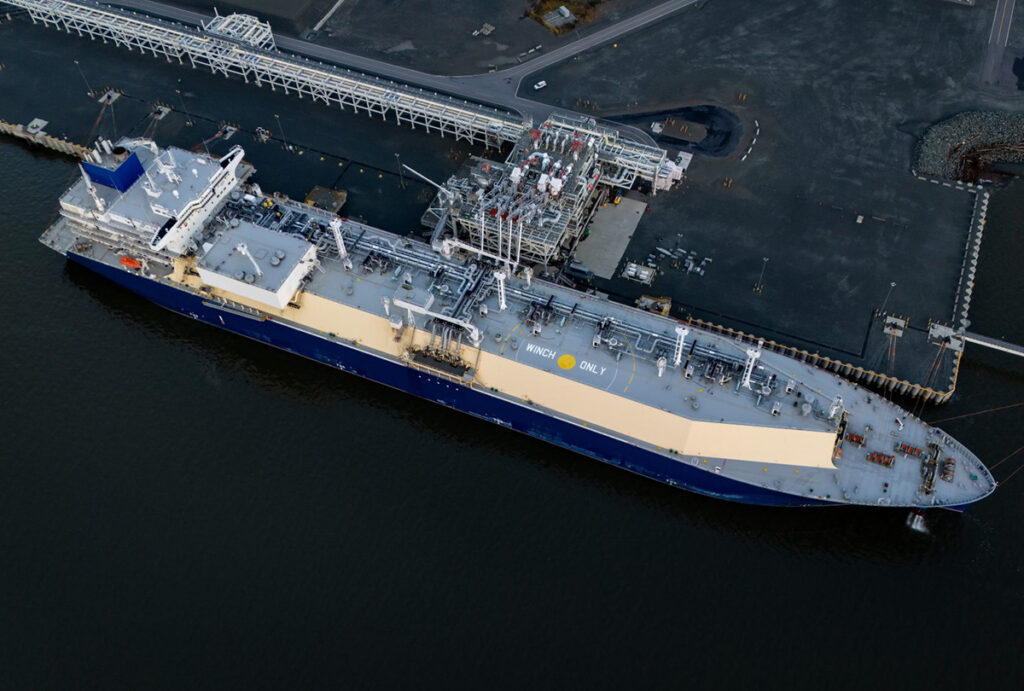
Wudang, a liquefied natural gas (LNG) tanker, fills up at an LNG Canada facility, in an aerial view, in Kitimat, B.C., on Thursday, November 13, 2025. THE CANADIAN PRESS/Ethan Cairns
In a world hungry for dependable fuel sources, the next wave of Indigenous-led LNG projects in British Columbia is becoming part of the strategic outlook for global shippers and maritime nations that carry much of the world’s energy supply.
Greece sits at the centre of that interest.
Its companies command about a quarter of the world’s carrier fleet in this sector, with more than 145 vessels already in operation through charter contracts, long-term arrangements and spot voyages across every major LNG route. Another 46 LNG tankers are scheduled to be delivered to Greek operators in the coming years, according to state industry reports.
Speaking on the sidelines of the 2025 Indigenous Partnership Success Showcase summit last week, Dimitrios Skoutas, Consul General of Greece in Vancouver, said British Columbia’s mix of infrastructure readiness, governance, community engagement and Indigenous participation is being noticed by shipping leaders in his country.
“Greek shipowners control one of the largest LNG fleets in the world, so our perspective is shaped by global demand, not regional trends. When we look at British Columbia, we see a jurisdiction that is building the kind of long-term stability that major carriers rely on,” he said.
“The scale of Greece’s LNG fleet gives us a front-row view of shifting global patterns. Asia is pulling more LNG than ever, and the Pacific route from British Columbia fits directly into that growth.”
Skoutas said Greek carriers already move a large share of the world’s LNG from the United States to Asia, adding “if Canada expands its presence in the Pacific market, our fleet is well positioned to support that flow immediately.”
“We see B.C. aligning infrastructure, governance and Indigenous partnerships in a way that sends a strong signal to the global shipping sector. This approach reduces risk and increases confidence for long-term LNG transport contracts.
Kaity K. Arsoniadis, the Honorary Consul of Cyprus in Vancouver and an international shipping expert, said British Columbia is emerging as a serious LNG player and the global maritime community is paying attention.



“The alignment between Indigenous-led LNG development in B.C. and the needs of international carriers is striking. Buyers want certainty, and so do shipowners. When you see long-term energy potential backed by stable partnerships, it sends a strong signal across global shipping networks,” she said.
Arsoniadis, who was among members of the Vancouver diplomatic corps at IPSS, said Canada already has a competitive international shipping regime and has been compared to centres like Singapore, Shanghai and Dubai.
“This competitive international shipping tax structure coupled with the advances in LNG on the west coast of Canada can further create strong relationships and international collaborations with global shipowners.”
Other diplomatic representatives at the Nov. 13 event included officials from Ireland, Italy, India, Poland, Japan, France and the United Kingdom. Their presence underscored the growing global interest in Indigenous-led projects in Western Canada. That interest shaped much of the discussion at this year’s IPSS gathering.
Crystal Smith, former Haisla Nation chief councillor, delivered a keynote highlighting the economic and cultural dividends of LNG participation for her community, reflecting her long-standing emphasis on shared ownership and stewardship. Her message connected directly to the conversations that Greece and other maritime nations are now having about long-term confidence in Pacific LNG supply.
Smith’s journey mirrors the rise of the Cedar LNG project, a partnership between the Haisla Nation and Pembina Pipeline Corporation. The floating facility is positioned to leverage Canada’s natural gas supply and B.C.’s infrastructure while using BC Hydro electricity to reduce emissions. As Haisla Chief Councillor from 2017 to 2025, Smith helped steer the project from concept to a positive investment decision in June 2024. The facility is scheduled to start up in late 2028 with a capacity of three million tonnes a year under 20-year tolling agreements.
A fireside conversation later examined Canada’s LNG role on the global stage through the Squamish Nation–Woodfibre LNG partnership. The discussion, moderated by Resource Works’ Stewart Muir, featured Woodfibre LNG chief executive Luke Schauerte and Squamish Nation Hereditary Chief Ian Campbell.
For the IPSS organizers, the momentum around LNG reflects the purpose of the event itself. Since its inception, the showcase has presented more than 200 success stories and helped facilitate deal-making that reached $2 billion in 2024 alone. Muir describes it as an “un-business conference” because the platform emphasizes trust, shared prosperity and long-term partnership building.
Other Indigenous-led LNG projects include several large developments now steering British Columbia’s export ambitions. The Nisga’a Nation is leading the Ksi Lisims LNG project on treaty land near Pearse Island. At roughly twelve million tonnes a year, it ranks among Canada’s most ambitious Indigenous-driven energy proposals and is moving through a fast-tracked federal process.
These projects stand alongside Indigenous-partnered developments already operating or nearing completion. LNG Canada in Kitimat, built in the traditional territory of the Haisla Nation, has entered production and shipped its first cargo in 2025, creating a firm export anchor on the Pacific coast.
Woodfibre LNG near Squamish, developed with the Squamish Nation and Tsleil-Waututh Nation, has secured approvals and is preparing for construction.
Share This:






















COMMENTARY: Ottawa Provides Glimmer of Hope and Streamlines Review Process for Energy Projects