


 CDN NEWS |
  US NEWS







By Jake Fuss and Grady Munro
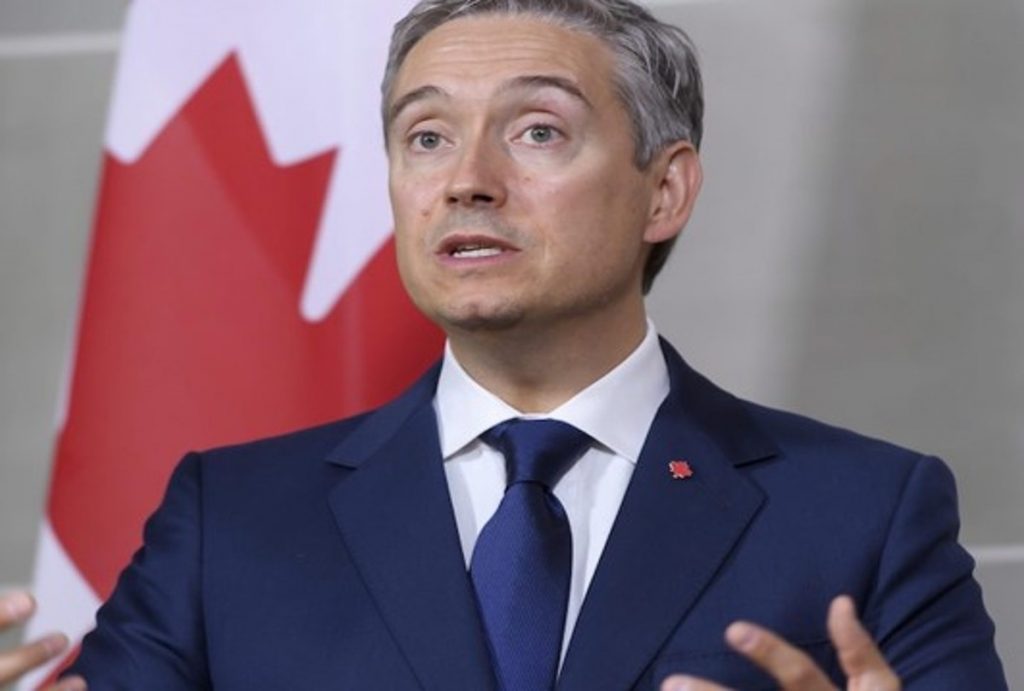
Despite promising a “very different approach” to fiscal policy during the election, the cracks are beginning to show as the Carney government released its first budget.
In a recent interview, Finance Minister François-Philippe Champagne said “Canada should be prepared for a generational investment.” This is the latest attempt by the government to spin the upcoming budget—which will include high spending, huge deficits and massive debt accumulation—as something different from what we experienced under the Trudeau government. But make no mistake, just like budgets from its predecessor, the Carney government’s first budget will burden Canadians for generations.
In case anyone has forgotten, the Trudeau government’s legacy included record-high spending and massive debt accumulation. From 2018 to 2023, the government recorded the six-highest levels of spending (on a per-person basis, after adjusting for inflation) in Canadian history, even after excluding emergency spending during the pandemic. As a result, spending exceeded revenues every year Trudeau was in power, so the government ran 10 consecutive deficits. Of course, when the government runs a deficit, it must borrow money. And the Trudeau government racked up the four highest years of total federal debt (per person, inflation-adjusted) in Canadian history from 2020 to 2023.
Given this fiscal legacy, it’s quite clear what a “very different approach” should look like—reduce spending, shift towards balanced budgets, and stop racking up debt. Yet, as budget day draws near and new details emerge, that’s not what Canadians should expect from Carney government’s first budget.


For example, Prime Minister Carney recently confirmed that this year’s budget deficit will be larger than last year’s $48.3 billion deficit. And again, Minister Champagne’s recent comments, that this “generational investment” (a.k.a. higher spending) will help Canada “reinvent itself,” are likely meant to soften this news and convince Canadians that the government is taking a different approach. But while some aspects of the government’s plan will certainly be different from what we’ve seen in recent years—a larger emphasis on defence spending, for example—the overall effect will still be higher spending and even more debt accumulation, this year and in years to come.
Why should Canadians care?
Several reasons. When government debt levels rise, the cost of debt interest often also rises. This year the federal government will spend a projected $54.5 billion on debt interest costs—equivalent to what it sends to the provinces for health care. Moreover, when governments borrow money, they can help drive up the cost of borrowing by increasing demand for the limited pool of savings that both government and the private sector compete for—making it more expensive, for example, for a family to take out a mortgage or businesses to attract investments. And to pay for today’s debt accumulation, governments in the future may raise taxes—a burden that will fall disproportionately on younger generations. According to research based on budget projections, a 16-year-old in 2025 can expect to pay an additional $29,663 in personal income taxes over their lifetime solely due to debt accumulation by the Trudeau government. When the Carney government adds more debt in its upcoming budget, it will increase that tax burden on younger generations of Canadians.
Ignore the Carney government’s spin. A “very different approach” to fiscal policy would require a reduction in overall spending. Instead, with its upcoming budget, the government will continue the massive spending and debt accumulation that defined the Trudeau era. And the costs of its “generational investment” will land squarely on the backs of younger Canadians.
Share This:






















INSIGHT: Canada’s Natural Resource Sector is at the Heart of the Government’s ‘Export & Diversification’ Plan