


 CDN NEWS |
  US NEWS







This Article and More by Chris Varcoe Here
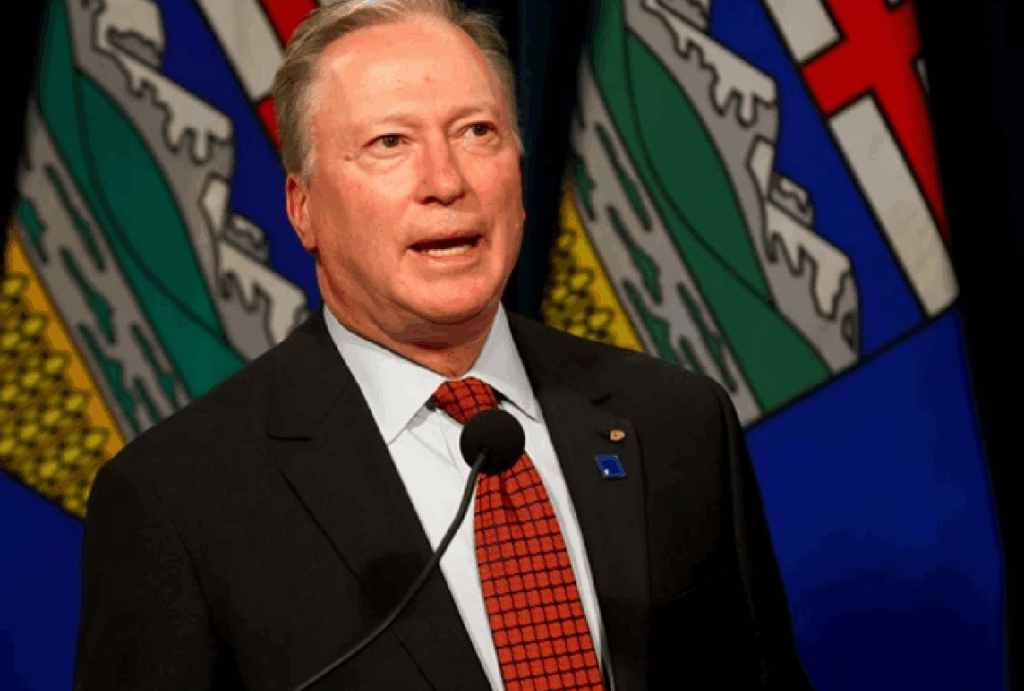
Greg Ebel, CEO of Enbridge Inc., speaks at a news conference in Calgary on Jan. 6, 2025. Darren Makowichuk/Postmedia
Enbridge CEO Greg Ebel said the Calgary-based company has tried to advance nation-building projects in the past — the ill-fated Northern Gateway development comes to mind — and has “about 500 million scars” to prove it.
He’s referring to how much the energy giant spent on its proposal to build an oil export pipeline to the Pacific Coast, before the Trudeau government effectively derailed it by introducing a tanker ban off the northern British Columbia coast in 2016.
Today, Enbridge is one of three midstream companies providing technical advice to an Alberta government advisory group as the province is the official proponent pitching another West Coast pipeline.
But they are not investing or acting as the project proponents.
The province hopes to submit a proposal to the federal Major Projects Office, based in Calgary, by spring.
What would it take for the country’s largest energy infrastructure firm to become the proponent and actively build — or become part of a group that develops it — if the province’s initial work looks positive?
“I can’t really answer that question today because there are a bunch of elements in there that are far more challenging than just the proposal,” Ebel said in an interview Thursday, after speaking to the Empire Club of Canada in Toronto.
“Where are we from a global market-need perspective at that point in time? Where are we with the government of Canada’s policies? Are they legislative changes or just verbal assurances?
“All of those have to be pretty concrete for us to dare take the risk again. I mean, I don’t think Charlie Brown enjoys Lucy pulling the football away, and I don’t think we’re going to risk that happening to us again.”
On Wednesday, the Alberta government announced it will act as the initial proponent for a new pipeline proposal that could move up to one million barrels per day to the northern British Columbia coast.
The province will contribute $14 million and head up and assemble a technical team to work on initial planning, cost estimates, start Indigenous engagement, and prepare an application for the federal Major Projects Office to consider.
However, the UCP government doesn’t intend to build or finance it.
Premier Danielle Smith speaks accompanied by Minister of Energy and Minerals Brian Jean, Minister of Indigenous Relations Rajan Sawhney, and Alex Pourbaix, executive chair of Cenovus Energy, at a press conference in Calgary on Wednesday, Oct. 1, 2025. Brent Calver/Postmedia
Ebel said Enbridge will provide “intellectual capital” to the advisory team, but noted “we’re a long ways from actually being in a position that you’d want to invest in a pipeline like that, given the conditions in the country.”
Indeed, no private sector company has surfaced to put money behind the province’s proposal.
Three pipeline operators — Enbridge, South Bow and the federal-owned Trans Mountain Corp. — will provide technical advice.
As the largest energy infrastructure operator in Canada, Enbridge understands the complexities of building major projects.
It was also the backer of the Northern Gateway project, which was designed to transport 525,000 barrels of oil per day from Bruderheim to Kitimat, B.C., but it was torpedoed by the tanker ban — a federal policy that remains in place.
And once Alberta’s technical review of the new project is done, what would need to happen for Enbridge to consider participating?

The federal tanker ban would have to be removed. The incoming emissions cap on the oil and gas sector would need to be changed.
The industrial carbon levy on petroleum producers would have to be changed.
And there would have to be a clear line to regulatory approval.
A tanker sits in dock at the Trans Mountain Pipeline expansion Westridge Marine Terminal in Burnaby, B.C. Photo by Handout /Trans Mountain Corp.
Earlier this year, the Carney government passed its Bill C-5 and recently released a list of five nation-building projects it wants to see expedited for regulatory approvals within two years.
During his speech Thursday, Ebel said the country needs to pick up the pace when it comes to getting projects approved and built.
“We are losing this race,” he told the audience.
“The prime minister has pledged to complete major federal project reviews in two years. That’s a good start . . . I think we could do even better.”
Meanwhile, opponents are lining up for another Canadian pipeline tussle, reminiscent of the fight over the Trans Mountain expansion and Northern Gateway.
The depth of the opposition was apparent Wednesday when B.C. Premier David Eby said Alberta’s pipeline proposal is not a real project, calling it “incredibly alarming to British Columbians, including First Nations along the coast.”
Former Trans Mountain CEO Ian Anderson, who led that expansion project for more than a decade, said the key issues for a new oil pipeline will include proving its commercial viability, and noted “acceptance of a project by local Indigenous and non-Indigenous communities is very critical.”
If all of the pieces align, the earliest a new pipeline could begin operating would be in the early 2030s, he estimated.
Former federal natural resources minister Seamus O’Regan, who moderated a fireside chat with Ebel on Thursday, believes Alberta’s premier is sending a signal by acting as the proponent for the proposed pipeline.
It’s unfolding as polls indicate a majority of Canadians support building pipelines in the country.
“We have a moment in time where Canadians have said, ‘We agree, we’ve to get stuff built,’” O’Regan said in an interview.
“Political moments are fleeting . . . you have to take advantage in these moments when they occur.”
Ebel noted that a West Coast project was deemed commercially viable in the past. With the right policies in place and customer support, it could be again.
“Now, it’s not going to be built until the customers are prepared to underwrite it, and they’re not going to do that until they’re comfortable that they’ve got the ability to produce the product that’s going to go into it,” he said.
“And that takes the changes in the policies.”
Chris Varcoe is a Calgary Herald columnist.
[email protected]
Share This:





















COMMENTARY: I Have Some “Dam” Questions – William Lacey