CDN NEWS |
  US NEWS









Canadian energy companies have been partnering more frequently with Indigenous communities
By Robert Tuttle and Thomas Seal
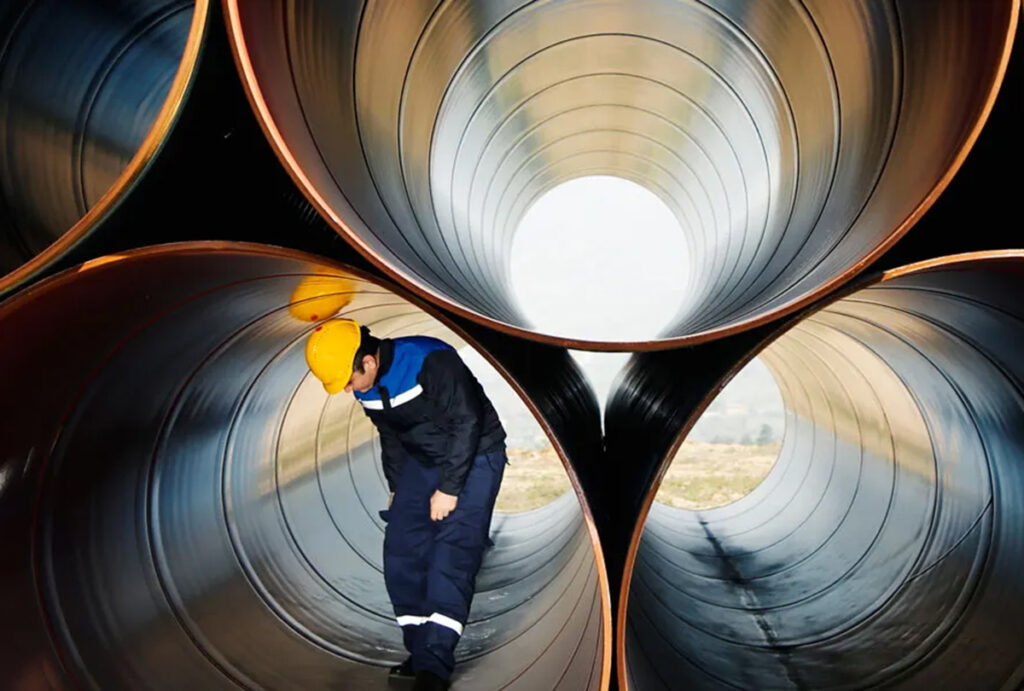
Alberta’s pitch to build a new crude oil pipeline to Canada’s Pacific coast has divided the region’s Indigenous communities, where there are memories of a similar project that was fought and eventually cancelled.
Canada holds one the world’s largest reserves of crude in the western oil sands, but the vast majority of its current production flows to one market: the United States. Alberta Premier Danielle Smith plans to advance a proposal for a new pipeline to ferry as many as one million barrels a day to the northern British Columbia coast, where it would be loaded onto tankers. That would be enough to more than double Canada’s oil-export capacity to Asia, lessening its dependence on the U.S.
Smith wants to clear a legal pathway, then draw in private investors to build and own the project — and part of the equity should go to First Nations communities, she has said. That may be the only way to win their support for the plan.
In Canada, First Nations have influence over economic developments in their traditional territories, after court rulings in their favour and a cultural and political reckoning over past injustices. When resource companies want to build, Indigenous groups are often able to negotiate deals that yield equity, a revenue stream, jobs and other benefits — a process dubbed “economic reconciliation.”
Some Indigenous leaders are now striking large deals with energy and resource companies. Dozens of First Nations signed up to buy a 12.5 per cent stake in a natural gas pipeline system in British Columbia, from Enbridge Inc. this year, for example. But others remain skeptical or opposed to deals that promote more fossil-fuel energy, citing risks to the environment or culture.
Prior to last Wednesday’s announcement by Alberta, the pro-development National Coalition of Chiefs was trying to put together a consortium of 31 Indigenous communities to push forward a pipeline proposal, according to Dale Swampy, chief executive of the coalition and a member of the Samson Cree Nation in Alberta.
Unlike Enbridge’s Northern Gateway pipeline, which was rejected in 2016 under former Prime Minister Justin Trudeau, any new oil pipeline should be majority Indigenous-owned, Swampy said.
“To get the coastal communities on side with something like this, you pretty much have to guarantee them control of the coastal and the marine environmental protection plans, which are quite extensive,” he said in a phone interview.
Coastal First Nations, another group of Indigenous communities in the region where Smith’s proposed pipeline would load oil into tankers, does not share Swampy’s enthusiasm. The coalition would look at legal challenges if a project advanced, said Marilyn Slett, its president.
“There is not anything that they can say to persuade, and it’s not because we’re anti-development,” Slett said. An oil pipeline would simply bring too much risk is is too divisive, she said.

“Our communities have accommodated a monumental increase in liquefied natural gas tanker traffic and there’s more on the horizon,” she said. “We simply can’t entertain the idea of adding crude oil tankers on top of that.”
The federal government currently bans oil tankers off the north coast of British Columbia; that would have to change that if it approves the pipeline.
Smith told CTV News the new oil pipeline would cost between $20 billion and $30 billion. But no one knows for sure because it isn’t even clear yet what route such a pipeline would take through BC’s rugged terrain. (Northern Gateway would have ended in Kitimat, in the northwest part of the province.)
British Columbia Premier David Eby is also not a fan of Alberta’s proposal.
To help indigenous groups pay for a stake in any new pipeline, Alberta can offer loan guarantees through an existing provincial agency called the Alberta Indigenous Opportunities Corp. There’s a federal equivalent with a $10 billion credit line, too.
Smith and Prime Minister Mark Carney have both talked about a “grand bargain” that would help Alberta increase its natural resource exports while also adopting carbon-capture technology to cut the greenhouse gas emissions of the heavily polluting industry. But Carney’s government hasn’t yet publicly committed to approving the pipeline to BC.
Indigenous groups don’t always have a veto. Several years ago, members of the Wet’suwet’en in BC tried to block construction of a gas pipeline to supply Shell PLC-backed LNG Canada.
Clashes between protesters, construction workers and police resulted in arrests, and in one instance turned violent. But the gas pipeline and liquefaction facility were ultimately built and began exporting LNG a few months ago.
Canadian energy companies have been partnering more frequently with Indigenous communities. The Haisla Nation in northern BC has become majority owner of a project called Cedar LNG, partnering with Pembina Pipeline Corp. in a structure which supporters hope sets a template for others to follow.
“Our experience has shown us that responsible resource development and environmental stewardship can go hand-in-hand,” Raymond Powder, chief of Fort McKay First Nation, said by email. Of the proposed oil pipeline, he said: “We’re encouraged by the opportunity this project represents for both Indigenous economic reconciliation and the Canadian economy.”
Bloomberg.com
Share This: