CDN NEWS |
  US NEWS









By Erik Hertzberg and Randy Thanthong-Knight
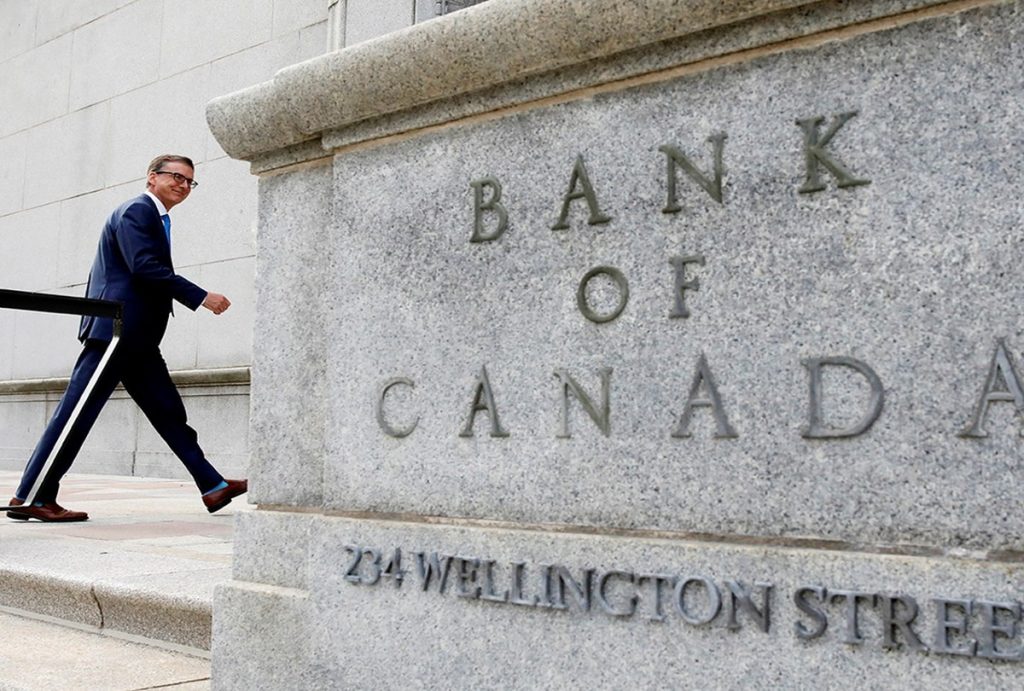
Bank of Canada officials said it would be tough to cut the policy interest rate further if core inflation remains firm, but acknowledged more easing may be needed if the economy continues to weaken.
Officials discussed cutting borrowing costs by a quarter percentage point earlier this month, but ultimately held the policy rate at 2.75% for a second consecutive meeting, according to a summary of their deliberations released on Tuesday.
Policymakers agreed that “the likelihood of a protracted and severe global trade war had diminished,” but said US trade policy remains unpredictable. The tariff dispute started by President Donald Trump is expected to slow growth, opening up further slack in the economy and eventually putting downward pressure on inflation, they said.
Still, officials expressed concern about the rise in core inflation measures, saying the increase could persist as consumers and business “adapt to the rewiring of global trade,” and noted that the direct impact of the tariffs hasn’t yet shown up in consumer price data.
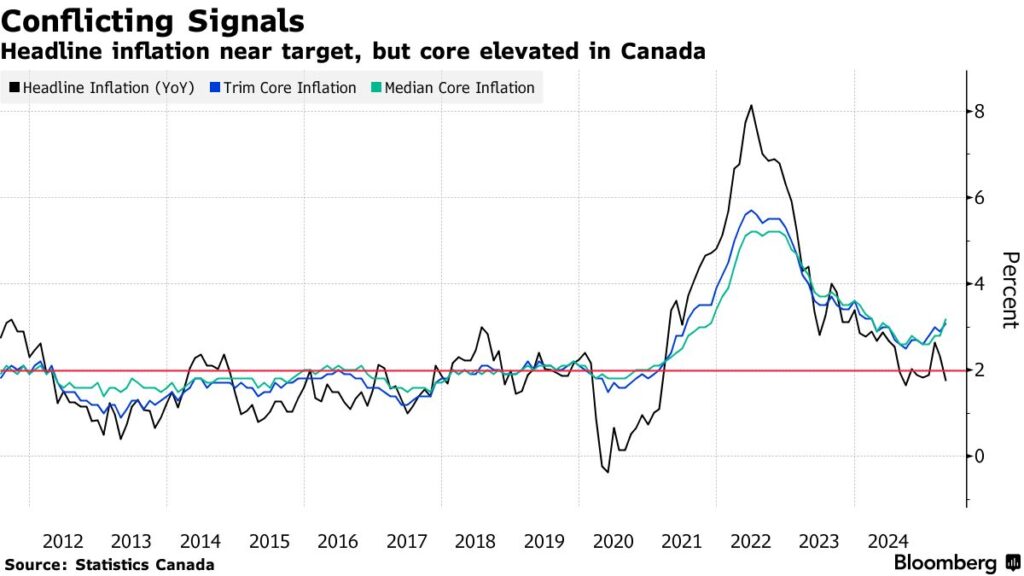
Core measures have surged in recent months — the yearly increase in the bank’s preferred gauges rose to 3.2% in April, the highest level since March 2024, and higher than officials said they expected since the start of the year.

“If the recent firmness in underlying inflation were to persist, it would be more difficult to cut the policy rate,” the bank said.
And while policymakers reiterated there was some “diversity of views on the most likely path ahead,” the communications suggest the bank remains ready to restart rate cuts if the economy weakens further. Still, officials are also constrained by the recent jump in underlying pressures, and are looking for more clarity from incoming data.
Governor Tiff Macklem will deliver a speech in St. John’s, Newfoundland on Wednesday, where he’ll also take questions from the media. Statistics Canada will release May inflation data next week and June inflation data the following month, ahead of the bank’s rate decision on July 30.
“The next two inflation prints are going to be key for the July policy decision as there’s little doubt we’ll see softening economic data over the coming weeks,” Benjamin Reitzes, rates and macro strategist at Bank of Montreal, said in an email. “If inflation slows broadly for the May and June prints, and the economy slows, the summary of deliberations is telling us a July rate cut is very much on the table.”
The minutes-like-summary also suggests the bank has refocused on output gap analysis when it comes to setting monetary policy — weighing how much inflation will slow in coming months against the potential for upward price shocks from the trade war.
“The weaker the economy and the more downward pressure on inflation, the more there would be a need to lower the policy interest rate further,” policymakers said.
Here are some other key takeaways of the summary of deliberations:
- Policymakers are focused on four indicators as they assess the impacts of tariffs:
- how much higher tariffs reduce demand for Canadian exports
- how much lower demand for exports spills over into business investment, employment and household spending
- how much and how quickly cost increases are passed on to consumer prices
- how inflation expectations evolve
- Officials view inflation in goods excluding energy as “close to its historical average” despite a recent acceleration
- They believe that the pass-through of higher input costs to consumer prices would be difficult to track going forward
- Some expressed concern about the increase in the breadth of consumer price index components growing above 3% in recent months, particularly for services
- Others looked at recent price growth in services as likely due to one-time price increases
- The bank said recent surveys showed consumers anticipate prices to rise because of tariffs and that businesses expect to pass tariff-related costs to consumers by raising prices
(Adds economist comment in paragraph nine.)
Share This: