CDN NEWS |
  US NEWS







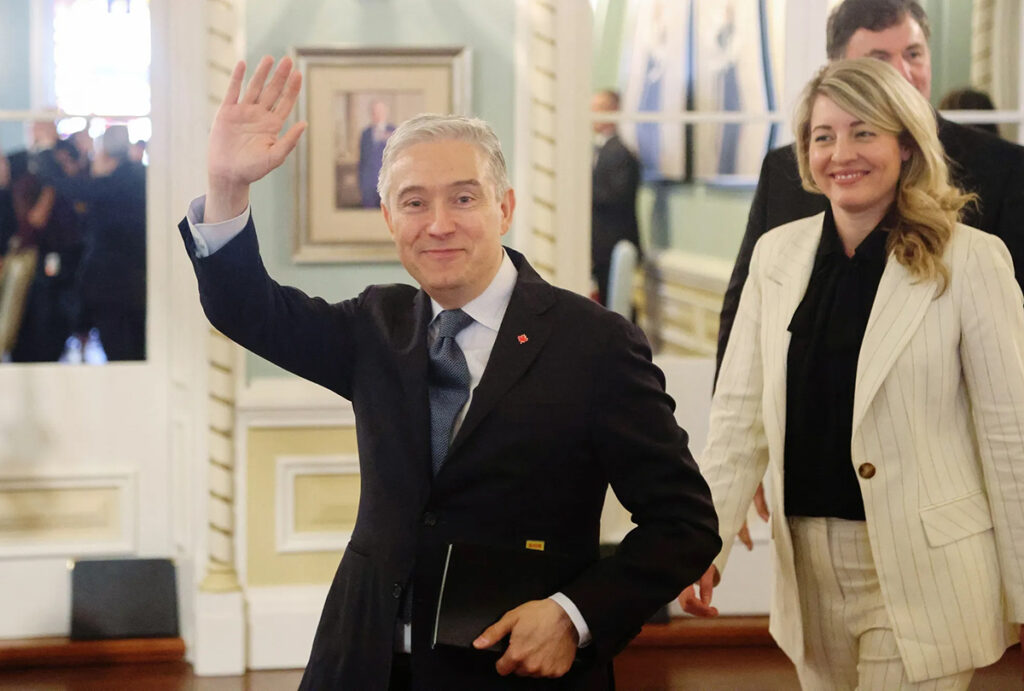
No budget this year, says Finance Minister François-Philippe Champagne. Photographer: Patrick Doyle/Reuters
Budget Delayed, Budget Denied?
Prime Minister Mark Carney unveiled his new cabinet on Tuesday, a day of pageantry, fist bumps and air kisses at Rideau Hall. The next day, it was time for one of his government’s first official moves, which turned out to be…nothing.
Finance Minister François-Philippe Champagne, who got the job right before the election campaign, casually said the government won’t bring forward a budget before Parliament’s summer break. In fact, it’s not clear he’ll release one at all this year. He said only that the government will implement an income-tax cut by July and publish an economic statement in the fall.
“I still don’t like this one bit,” said Derek Holt, Bank of Nova Scotia’s head of capital markets economics, wrote in a report Thursday. “Canadians have a right to know the state of the government’s finances — like how bad are they now — and the planned consequences to deficits and debt.”
The government may be trying to keep its options open in the face of unpredictable policies from the Trump administration, Holt said. “But I’d prefer transparency along the way, adjust as needed, while maximizing optionality.”
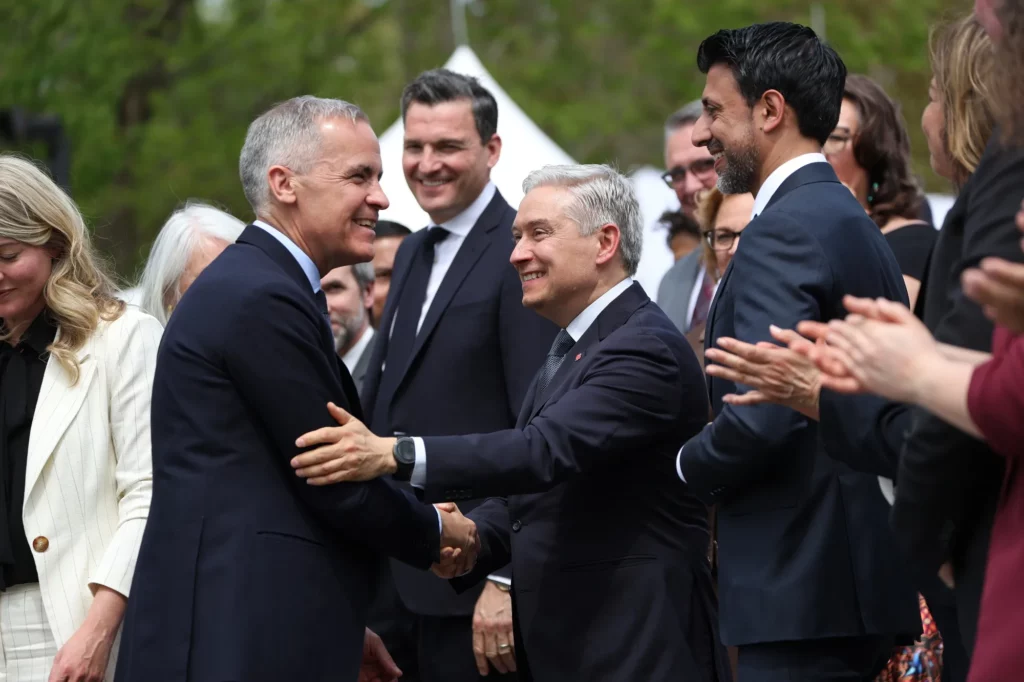
Carney shakes hands with Champagne after a swearing-in ceremony for the new federal cabinet, a mix of familiar faces and political rookies. Photographer: David Kawai/Bloomberg
Since the middle of December, we’ve had three swearing-in ceremonies for new federal cabinets, but zero budgets.
Carney’s Liberal Party did put forth a rough fiscal plan during the recent campaign, and Champagne pointed to it in his comments to the media, stating, “Priorities are not going to be different.”
But that document was criticized for some optimistic figures, such as a pledge to find C$32 billion ($22.9 billion) in combined savings by 2028-29 through improved productivity and a program review.
And one of the key numbers in the Liberal platform was an assumed C$20 billion in revenue from “Canada’s tariff response” this fiscal year. The government’s retaliatory taxes against US products would bring in a small windfall, the Liberals said, helping to offset the reduced tax take from slower economic growth.



That figure looks shakier this week after an Oxford Economics report analyzed the impact of tariff exemptions that Champagne himself announced last month.
In a bid to soften the blow for the domestic economy, Carney’s government put a six-month pause on tariffs for products used in Canadian manufacturing, processing and food and beverage packaging, and for items related to health care, public safety and national security.
Some retaliatory tariffs on US goods remain, including on consumer items like coffee, booze, clothes and makeup (good time for a “buy nothing” year). But the government has also given automakers a break, allowing companies that manufacture in Canada to import some vehicles to the country tariff-free.
It’s a lot of exemptions. The overall result is that the real tariff rate on US goods hasn’t increased much at all, according to Oxford economists Tony Stillo and Michael Davenport. So what about that C$20 billion, which was rather important in helping the Liberals publish a platform with a projected deficit of C$62 billion, rather than something larger?
The decision to dodge the budget for now drew criticism from some in the finance world. The government should “act boldly,” Jon Love, executive chair and founder of KingSett Capital, wrote on LinkedIn, adding, “but as every business person knows, that always starts with a plan, guided and defined by a budget.”
But it’s also worth looking at another early move by Carney’s new team. And it’s one that other business types — particularly top bank leaders and resource-company executives — will likely be more focused on than the missing budget.
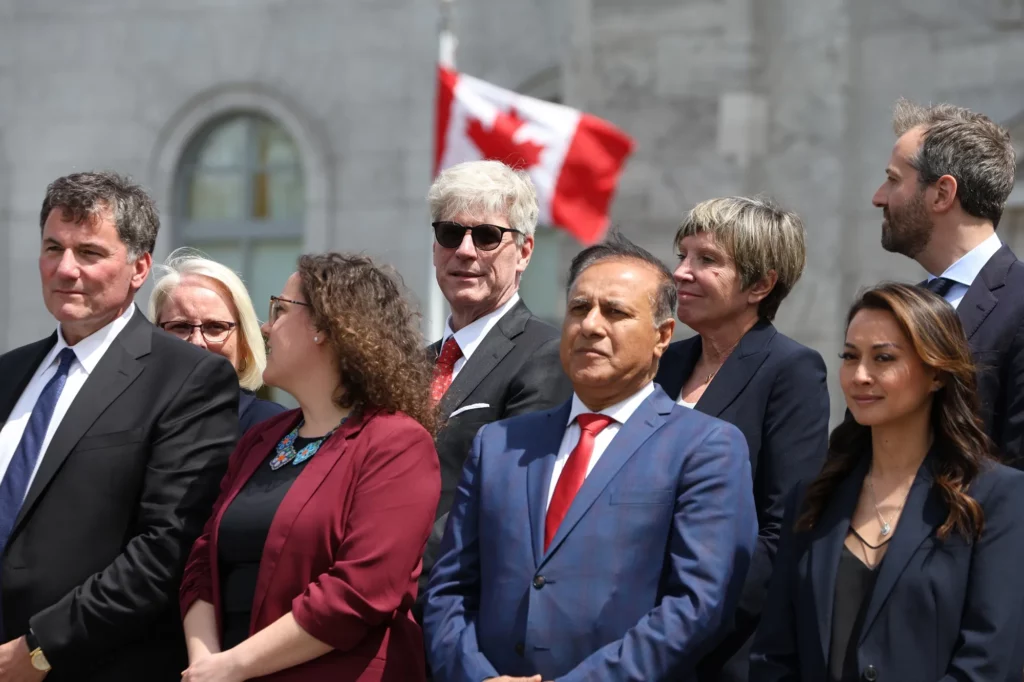
Tim Hodgson, top row center, is wearing shades because Canada’s economic future is so bright. Photographer: David Kawai/Bloomberg
The morning after Champagne’s budget-free media appearances, Enbridge Inc. announced it was selling a stake in natural gas pipelines to a group of First Nations in British Columbia. The deal will be backed by a C$400 million loan guarantee from the government.
Scan the press release and you’ll notice it quotes Tim Hodgson, the former Goldman Sachs banker and newly minted minister of energy and natural resources. He called the agreement a “powerful example of how our new federal government is getting things done in Canada.”
Hodgson wasn’t named finance minister, as the prime minister decided to stick with the politically battle-tested Champagne. But Hodgson’s appointment to a senior economic post is being taken as a positive signal by many on Bay Street that Carney is serious about unlocking more investment and faster project approvals in the resource sector.
And they don’t need a budget to do that. Never mind transparency!
Share This: