


 CDN NEWS |
  US NEWS







By Jason Clemens and Niels Veldhuis
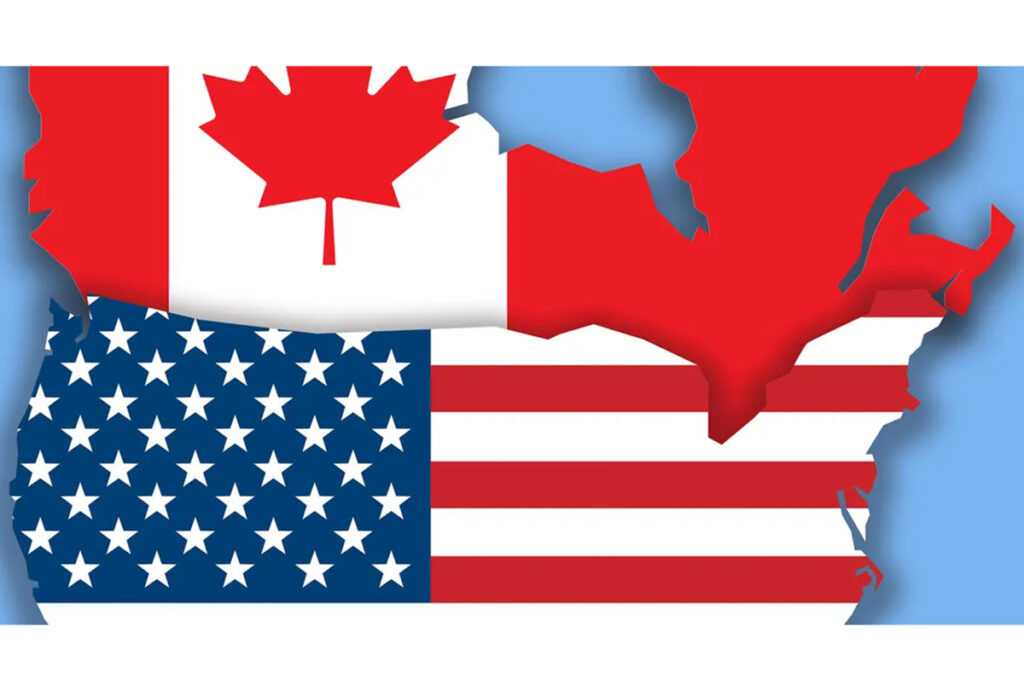
In his recent White House meeting with Prime Minister Carney, President Trump continued to disrespect Canadians with what appears to be an obsession with Canada becoming the “51st state.” An entire series is needed to explain all the mistakes and nonsense contained in the president’s comments, but it’s important to recognize that Trump’s vision would not necessarily make Canadians better off and would certainly hurt the Republican Party’s electoral fortunes.
Let’s start with the crass politics. The Republican Party, which President Trump leads, would never support Canada’s statehood as it would deliver the Democrats a decisive electoral advantage.
Consider some rough numbers, which determine congressional districts, and the results of the U.S. 2024 and Canadian 2025 elections.
Using 2020 data, which aligns with the latest U.S. census, Canada’s 38.0 million people would make us the second-largest state behind only California. Assuming the current 435 seats in the House of Representatives are reapportioned, Canada would receive roughly 43 seats. If, based on the 2025 Canadian election results, we assume most of the Liberal, NDP, Bloc and Green Party votes would go Democrat, the Democrats would win 26 “Canadian” seats versus 17 for the Republicans, a difference of nine seats (and this is likely a best-case scenario for the GOP).
Why is this decisive? In the 2024 U.S. election, the GOP won 220 congressional seats compared to 215 for the Democrats, for a difference of five seats. And a majority of the 43 Canadian congressional seats would likely be “safe” for the Democrats versus less than one-quarter safe seats for the Republicans. At the very least, Canadian statehood would make Republican majorities in the House more difficult.



In this hypothetical scenario, the U.S. Senate is even more decisive as it’s almost a given that both Canadian senators (each state receives two) would be Democrats. And the U.S. Senate, like the House of Representatives, normally operates with slim majorities—currently 53 Republicans vs. 47 Democrats.
Finally, Canada’s statehood would also deliver an advantage to the Democrats in the presidential race since it’s winner-take-all at the state level (except for Nebraska and Maine), meaning all electoral votes for president go to the candidate with the plurality of the vote in each state. The last time Canadian voters delivered a majority of the popular vote to a Conservative was in 1984 (50.04 per cent) during Prime Minister Brian Mulroney’s landslide election victory.
Policies also matter. In the recent meeting with Prime Minister Carney, President Trump reiterated how Canadians would benefit from joining the U.S., particularly on the tax front. The reality is much more complicated that President Trump’s rhetoric.
The top federal personal income tax rate in the U.S. is 37 per cent compared to 33 per cent in Canada. Other federal income tax rates in the U.S. are either higher or generally comparable to Canadian federal tax rates except for lower-income workers, which are generally lower in the U.S. Federal payroll taxes (covering Social Security, Medicare and federal unemployment) are also higher in the U.S. than in Canada, though sales taxes are lower in the U.S. President Trump seems wholly unaware that the U.S. tax advantage over Canada largely exists at the state level, not the federal level.
The U.S. federal government also uses deficits (i.e. borrowing) to avoid taxing its citizens today to fully pay for current spending to a far greater degree than Canada. According to the Congressional Budget Office, the federal deficit—that is, the difference between revenues collected and the amount of money spent by the federal government—in the U.S. will reach an estimated 6.2 per cent of the economy this year (2025) compared to 1.3 per cent in Canada.
There are also a handful of policy areas where Canada currently has a material advantage over the U.S., including the funding of our Canada Pension Plan compared to the nightmare lack of pre-funding for Social Security in the U.S., our decentralized approach to K-12 education, our less politicized judicial system, and our general decentralization within federation, to name a few.
The U.S. and indeed the world would be far better served if President Trump focused on resolving the tariff war, which continues to impede economic progress both in the U.S. and abroad, rather than obsessing with the non-starter of Canada becoming the 51st state.
Share This:




















SETTING OFF ALARM BELLS: Carney’s EU Deal Threatens Alberta, Energy, & Sovereignty – 170,000 Reasons to Reject Canada’s EU “Associate Membership” – The Nemeth Report