CDN NEWS |
  US NEWS









By: Elmira Aliakbari and Kevin Chan
Energy Costs and Canadian Households: How Much Are We Spending? 2025 Edition
- This study examines energy spending by Canadian households and the extent of energy poverty, defined as households spending at least 10% of their total expenditures on energy goods.
- Between 2019 and 2021, Canadian households spent approximately two percent of their total expenditures on within-the-home energy goods (electricity, natural gas, and other heating fuels) and around five percent when gasoline is included. When only energy used within the home was included in the calculations, 6.2% of households were classified as energy poor in 2021, up slightly from 4.7% in 2019. When the gasoline expenses of Canadian households are also included, 11.0% of households were classified as energy poor in 2021, down slightly from 12.3% in 2019.
- Regional disparities in energy poverty are pronounced. In 2021, Atlantic Canada had the highest incidence of energy poverty – 24.6% of households – when gasoline expenditures were included, while British Columbia had the lowest in the country, at 8.1%.
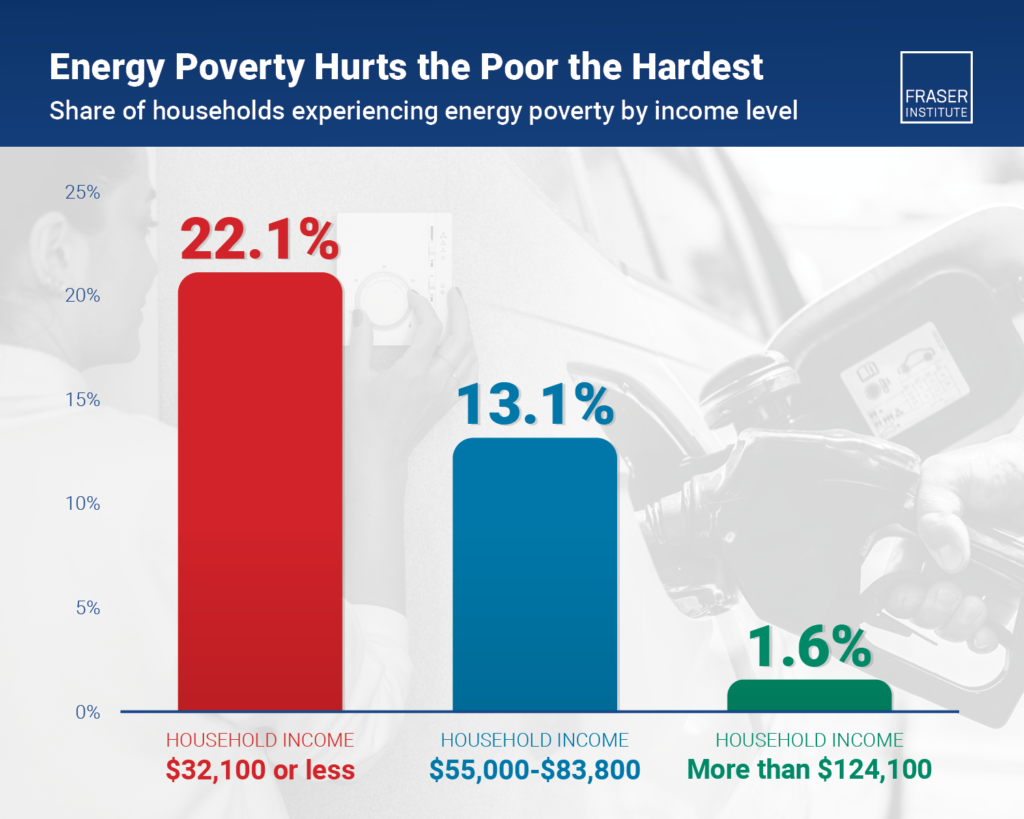
- Energy poverty disproportionately affects lower-income households. In 2021, 22.1% of households in the lowest income quintile (earning $31,200 or less) and 20.7% in the second-lowest quintile (earning $31,200 to $55,000) experienced energy poverty when gasoline expenses were included.
- The high incidence of energy poverty in Canada, particularly among low-income families, should be a key consideration in energy policy development. Policies that raise energy prices and result in higher energy costs could exacerbate the problems faced by families who are already energy poor and force more households into energy poverty.

Share This: