


 CDN NEWS |
  US NEWS







We can reduce hydrocarbon consumption in many modest ways to materially mitigate GHG emissions and reduce consumer energy costs. This approach can be more successful than the loud clamouring of some environmentalists who want to eliminate burning fossil fuels to rapidly reduce greenhouse gas (GHG) emissions to address climate change. The federal government is pursuing the same goal with an aggressive, expensive, and disruptive approach whose success is doubtful.
Given how essential fossil fuels are to the well-being of humankind, it’s implausible that we can eliminate burning fossil fuels. Similarly, the same hydrocarbons are the chemical precursors of a wide range of products we consume daily and contribute to our quality of life. Demand for those products is increasing globally.
Notwithstanding those realities that some seem to ignore, we can reduce hydrocarbon consumption in many ways to reduce GHG emissions. In some applications, we can transition to alternative technologies that impact the climate less. This approach, while not as dramatic and press-conference-worthy as some environmentalists and governments want, is likely more cost-effective and successful in addressing climate change.
Let’s explore the opportunities.
To read part one of this two-part series that discussed reducing gasoline consumption, click here.
Distillate fuel oil
Distillate fuel oil includes diesel fuel and heating oil. It is 20% of fossil fuels sold for combustion.
Many opportunities exist to reduce diesel fuel and heating oil consumption while still enjoying the convenience and low cost of fossil fuels. Here are the major ones.
Motorist diesel fuel
The same opportunities exist for diesel vehicles as were previously discussed for gasoline cars. The opportunities are:
- Switch to EVs or hybrids.
- Drive fewer kilometres.
- Drive more efficient cars.
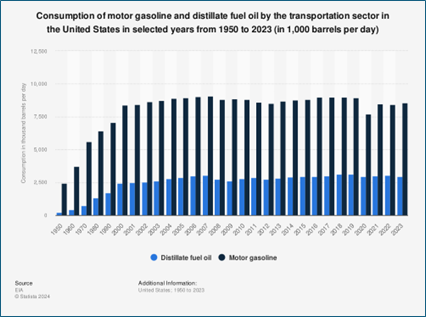
Source: Consumption of motor gasoline and distillate fuel oil by the transportation sector in the United States, Statistica, 2024
Gasoline consumption is almost three times higher than diesel consumption in the US. Europeans consume less gasoline and more diesel. These opportunities can reduce transportation costs and lower GHG emissions.
Truck and ship diesel fuel
The vast fleets of trucks and ships critical to our economy consume enormous amounts of diesel fuel. They create significant GHG, NOx and particulate emissions. Diesel consumption will likely increase slightly, as shown in the chart below.
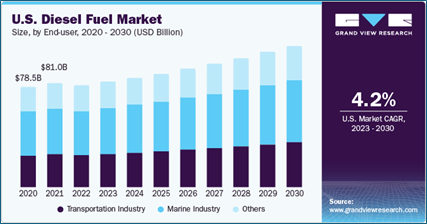
Source: Diesel Fuel Market Size, Share & Trends Analysis Report, Grand View Research, 2023
Few heavy trucks and ships will be electrified in the future because the weight of the batteries for large vehicles travelling long distances makes such a transition from diesel impractical. The most significant opportunity to lower the GHG emissions of heavy trucks is to switch more truckloads to railways and ships. More ships will be converted from diesel to LNG. Smaller opportunities exist to improve the efficiency of engines and make trucks less wind-resistant.
Heating oil
In some parts of the world, most homes use heating oil for space heating. The chart below shows the reduction of GHG emissions when a heat pump replaces a natural gas furnace in various climates. The GHG reduction is greater when replacing a heating oil furnace.
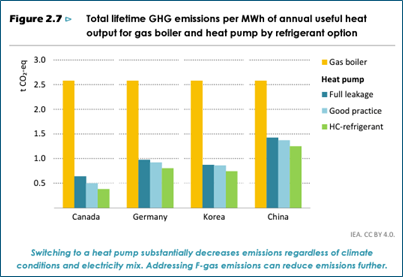



Source: The Future of Heat Pumps, IEA, p. 58
Those who consume heating oil for space heating can reduce their GHG emissions by:
- Lowering the thermostat a little.
- Installing more insulation and better windows.
- Switching to a natural gas furnace where feasible.
- Switching to a heat pump where feasible.
- Switching partially to electricity from roof-top solar panels.
These opportunities vary widely in cost and the percentage of GHG emissions they eliminate. All are a material step forward in reducing fossil fuel consumption.
Hydrocarbon gas liquids (HGLs)
HGLs include ethane, propane and butane. They represent 20% of fossil fuels sold for combustion. The chart below shows the reduction of CO2 and other emissions for vehicles powered by propane autogas vs. gasoline. The CO2 reduction is 22%.
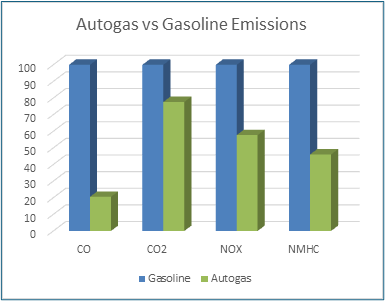
Source: EPA Reports Propane Autogas Dramatically Reduces Harmful Emissions Compared To Gasoline, September 26, 2016
The opportunities are:
- Consider a propane-powered car the next time you need to purchase a car.
- Convert your current vehicle to propane.
The use of propane is constrained in particular regions by the limited number of filling stations.
Jet fuel
Jet fuel is almost 2% of fossil fuels sold for combustion.
Jet engine manufacturers should be commended for significantly reducing jet fuel consumption and GHG emissions over many years, as shown in the chart below. These manufacturers are likely close to the end of their ability to improve the efficiency of jet engines.
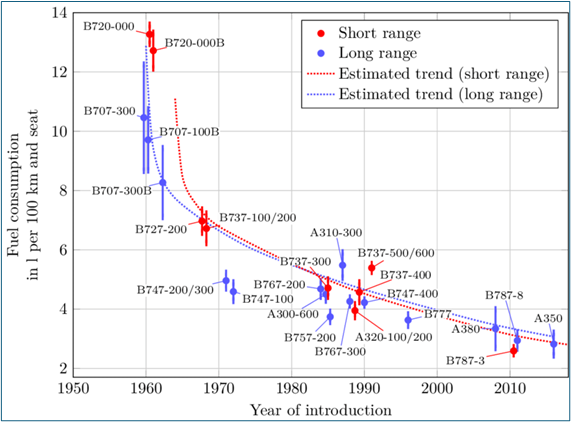
Source: Fuel consumption of commercial aircraft, Knoblach, 2015
The most significant opportunity to reduce GHG emissions and transportation costs associated with jet fuel is to replace short-range flights with high-speed rail.
This list of opportunities shows that households and businesses can reduce GHG emissions and advance the energy transition materially by:
- Reducing consumption of fossil fuels with no adverse impacts.
- Transitioning from fossil fuels to lower GHG emission technologies.
It’s not clear that pursuing an aggressive, expensive, and disruptive approach will advance the energy transition more quickly.
About Yogi Schulz
Yogi Schulz is an information technology consultant who works extensively in the petroleum industry to select and implement administrative, operations, and geotechnical systems. He writes regular articles about developments in the energy industry and technology.
You can contact Yogi Schulz through his LinkedIn profile at this link.
Share This:



















