


 CDN NEWS |
  US NEWS







The federal government has set a GHG emissions reduction target of at least 40% below 2005 levels by 2030, equivalent to 38.5% below 2022 levels.
- This report examines proposed policies aimed at achieving these goals and evaluates their potential impact, aiming to address the gap left by the federal government’s lack of efforts in this matter.
- The paper uses a peer-reviewed macroeconomic model to assess the federal government’s Emissions Reduction Plan (ERP), including carbon pricing, Clean Fuel Regulations, and other regulatory measures such as EV mandates.
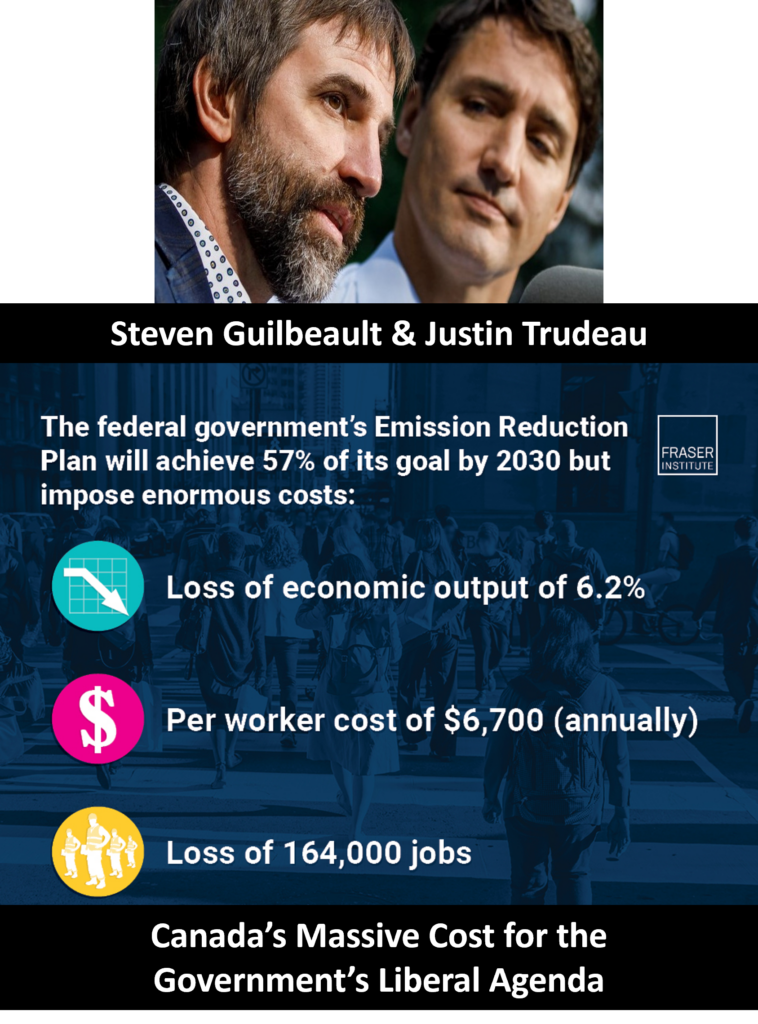
- It is estimated that the ERP will reduce Canada’s GHG emissions by about 26.5% between 2019 and 2030, reaching approximately 57% of the government’s 2030 target, leaving a substantial gap.
- The implementation of the ERP is expected to significantly dampen economic growth, with a projected 6.2% reduction in Canada’s economy (i.e., real GDP) compared to the base case by 2030.
- Income per worker, adjusted for inflation, is forecasted to stagnate during the 2020s and decrease by 1.5% by 2030 compared to 2022 levels.
- The ERP costs $6,700 per worker annually by 2030, which is more than five times the cost per worker compared to the carbon tax alone.
- Overall, while the federal ERP will contribute to reducing GHG emissions, it falls short of meeting the 2026 or 2030 targets and imposes significant economic burdens on Canadian households. Additionally, due to the high marginal cost of many regulatory measures, the ERP plan is costlier than it needs to be for what it will accomplish.
Author:
Professor of Economics, University of Guelph

More from this study
Read the News Release
Share This:






















OPINION: The Iran War Energy Crisis is Just Getting Started: Bousso