


 CDN NEWS |
  US NEWS







By Dave Korzinski, Research Director
One thing is certain about the carbon tax discourse in this country, the “pro” side is losing the battle. Recent data from the Angus Reid Institute finds overall support for the carbon tax down 11 points since 2021. This, as CPC leader Pierre Poilievre gains momentum with an “axe the tax” slogan and focus on cost-of-living concerns.
It’s clear now that household financial concerns are paramount in the minds (and voting preferences) of Canadians, and while they would like to continue to fight climate change, most see the carbon tax as an inefficient and unfairly expensive mechanism to do so. But do Canadians actually know what they’re paying?
Well, the answer is some do. This is an important aspect of the communications battle that the Trudeau government is currently losing. Our latest release on this topic found many Canadians convinced that they’re either not receiving their Canada Climate Action Incentive rebate at all, or that when they do, the benefit gained back is not worth the cost they’ve paid in the preceding quarter toward carbon-taxed activities.
Based on responses to our survey ARI created an Index to better understand these perceptions in the regions that operate under the federal carbon pricing mandate: Alberta, Saskatchewan, Manitoba, Ontario, and beginning this year, Atlantic Canada. What we found is that broadly, one-quarter of residents say they do not receive a rebate, and one-quarter are unsure either whether they received one, or what it amounted to. The largest group say they received a rebate but feel they paid more in extra costs than they received back. The federal government claims that nearly all households in these jurisdictions will receive a rebate, as long as they filed taxes, and that 80 per cent of households will earn back more than they pay.
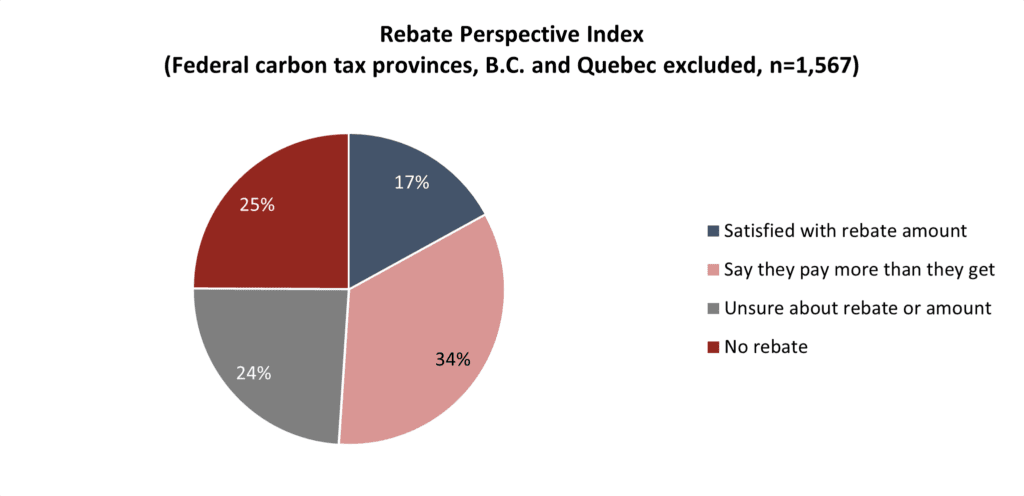



The most troubling perceptions here from the perspective of the federal government, in its ongoing public-opinion freefall, are those among lower income earners. Analysis from the non-partisan Parliamentary Budget Office suggests these groups are nearly guaranteed to receive back more than they pay. But as we can see in the subsequent graph, they’re little more likely to be certain that they’re benefiting from the program than those with much higher incomes:
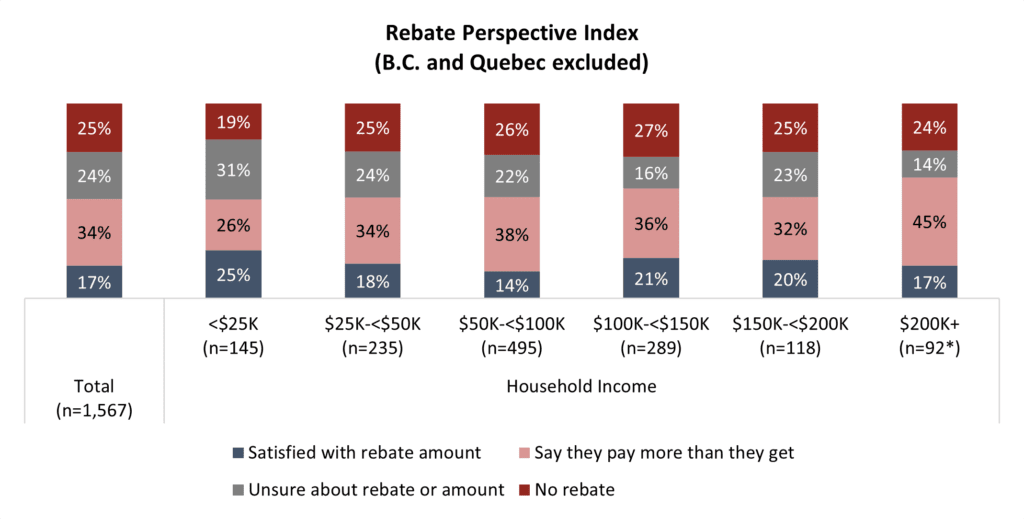
*Smaller sample size
Why does this matter? Well, if you’re attempting to sell a tax by stating that low-income earners won’t ultimately pay anything, it’s important to ensure people feel like this is their reality.
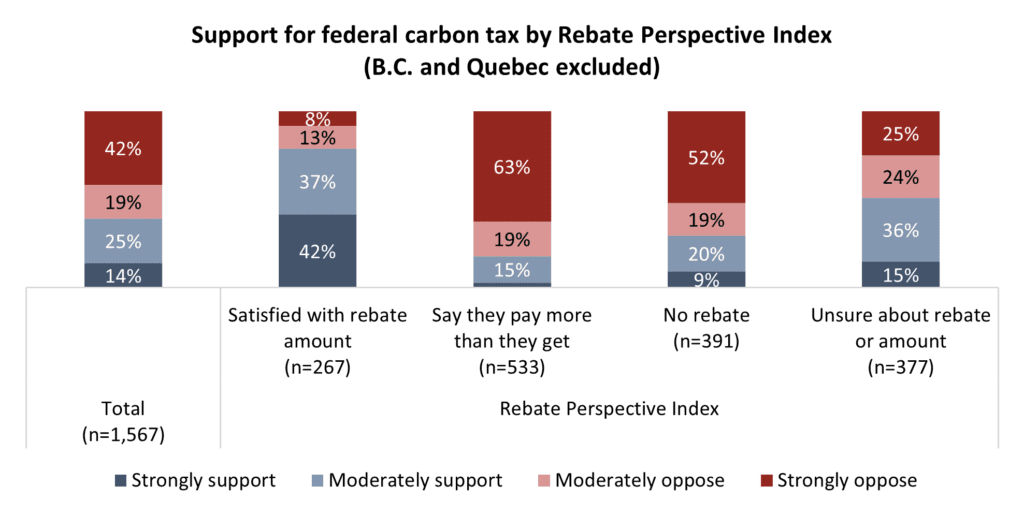
Those who feel they’re breaking even or benefiting from the tax are vastly more likely to say that they support the carbon tax – four-in-five do. Even those who are unsure about it, but simply don’t feel they’re losing out, are 50/50. Those who say they pay more than they get or don’t receive a rebate at all are overwhelmingly opposed to the program.
Link to the full story here: www.angusreid.org/
Share This:





















COMMENTARY: Varcoe: ‘Do No Harm’: Should Alberta Step in to Fix Gas System Constraints, Given Past Energy Interventions?