CDN NEWS |
  US NEWS









Courtesy of ENERGYminute
See more articles and infographics from ENERGYminute HERE
Canada, a leader in the global nuclear industry, recently released an update on how it plans to manage this nuclear waste for generations to come.
Background: Nuclear power facilities provide a stable source of clean, baseload electricity with one major drawback: the same process that generates electricity, also produces radioactive waste as a byproduct.
Canada has been a leader in nuclear power generation since the 1960s, with six nuclear power stations using 19 reactors in operation today. In total, they account for about 15 percent of Canada’s total electricity supply.
The downside: The facilities have also produced about 3.3 million used nuclear fuel bundles. To visualize that in the most Canadian way possible, that’s enough waste to fill about 9 hockey rinks from the ice to the top of the boards.
Canadian nuclear waste storage facilities by location
percentage of total volumes stored per province

Courtesy of the National Waste Management Organization
Designing a long-term solution
Around 2040, Canada plans to move its nuclear waste from 7 interim locations—if you can call over 60 years of nuclear waste storage “interim”—to a single long-term storage facility that will stay active until about the year 2190.

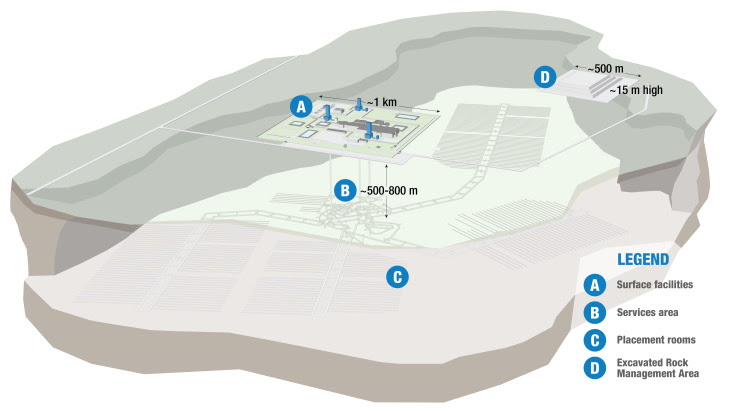
The Canadian National Waste Management Organization (NWMO) describes the 150-year, $27 billion facility as a “deep geological repository”. Glazing over decades of sophisticated engineering and international best practices, we prefer to call it by its descriptive name: a “very deep hole”.
Canada’s planned deep geological repository
Courtesy of the National Waste Management Organization
We assume that the preferred plan of disposing of nuclear waste by launching it into the sun isn’t commercially viable yet.
The big picture: Like Martha Stewart, nuclear is something the public lost a lot of faith in but is now willing to give a second chance. Ensuring that the public trusts in the safety of nuclear power, including the effective management of nuclear waste, is key to maintaining support for a sustained and expanded nuclear energy industry.
A single international incident like Fukushima can leave a lasting impact on the public, so international cooperation and adherence to global standards is vital and is, in part, why Canada is taking such a diligent approach to develop this long-term solution.
Bottom line: As Canada works through its plan for mitigating the risk of nuclear waste storage, it does so not only for the benefit of Canadians, but as an example of safe nuclear management practices across the world.
+Additional Reading: The Nuclear Waste Management Organization’s Tri-Annual Report
++Additional Infographic: Electricity Mix by State and Province
Share This: