CDN NEWS |
  US NEWS









By Yogi Schulz
Here’s the link to my IT blog at IT World Canada:
The world is not investing enough in developing energy sources to keep up with primary energy consumption. This gap between demand and supply creates:
- High consumer energy prices and lower economic growth.
- Risk of energy insecurity.
- An opportunity to supply more Canadian energy resources, given that some consumers value Canada’s Environmental, Social, and Governance (ESG) Leadership.
Globally, we can narrow this gap by:
- Recognizing the role of fossil fuels in the energy transition to maintain energy security.
- Reducing permitting costs and elapsed time for energy development projects.
- Eliminating government interference in energy markets that is adding to investor risk.
- Ignoring the push from various environmental groups to quit lending and providing insurance for fossil fuel development projects.
- Overcoming our irrational fear of nuclear energy generation.
- Encouraging more energy conservation.
- Building more interconnects among electrical distribution grids to better utilize available generation capacity.
Below is a summary of the analysis suggesting an energy gap is looming. The beneficiaries of the gap will be:
- OPEC+ by increasing its revenue due to its pricing power.
- Increased economic prosperity for Canada if we choose to revise our anti-energy development policies.
Perhaps the energy gap is closer than we think, as the IEA predicts record demand.
Primary energy consumption growth
The chart below shows that global primary energy consumption will grow significantly during the next 30 years as billions of people move out of poverty and consume more energy.
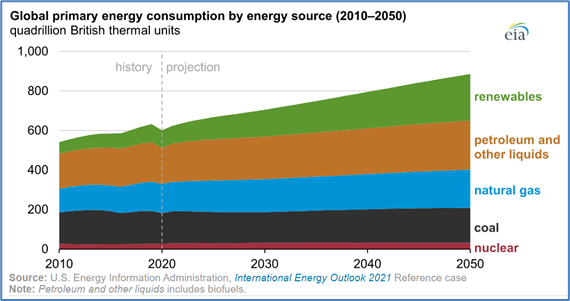
Source: EIA
These new consumers will consume more fossil fuels than renewable energy for various reasons, including:
- The lack of complex infrastructure required to generate and distribute renewable energy.
- Living in regions of too much political instability to attract long-term capital investment.
- Familiarity with fossil fuels leading to a reluctance to change.
- The lower cost of fossil fuels in many circumstances.
While the chart above shows growth in renewables consumption, there is no decline in the consumption of fossil fuels. That decline is required to avoid further increases in greenhouse gas (GHG) emissions in the atmosphere.
We can expect global oil and natural gas consumption to increase for many years, as shown, even as first-world countries continue along the energy transition path. I understand this forecast is a disappointment for those who promote a rapid energy transition, but it’s likely the reality we will experience.
Required increase in energy generation
For the world to achieve net zero GHG emissions by 2050, the energy transition from fossil fuels to renewables requires a quadrupling of global wind and solar generation capacity in less than ten years, as illustrated by the chart below.
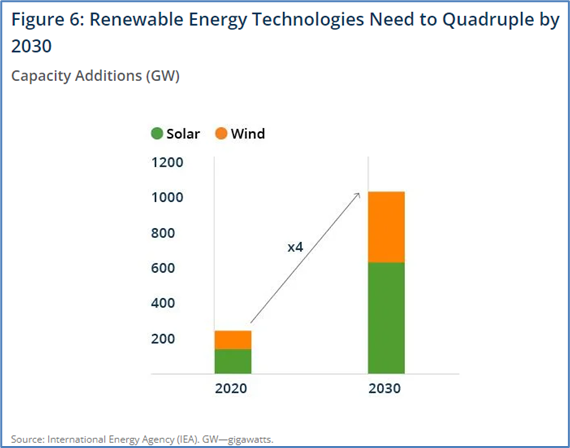
Source: Brookfield
This capacity increase requires an investment in the trillions of dollars that is not evident.
This already daunting capacity addition may be an understatement once the wide discrepancy between nameplate and effective capacity of wind and solar generation stations is considered. This discrepancy measures the effect of the intermittency of these renewable generation technologies.
Investment shortage by category
The chart below shows a modest increase in energy investment by category during the past three years. Such modest increases will likely continue for several years.
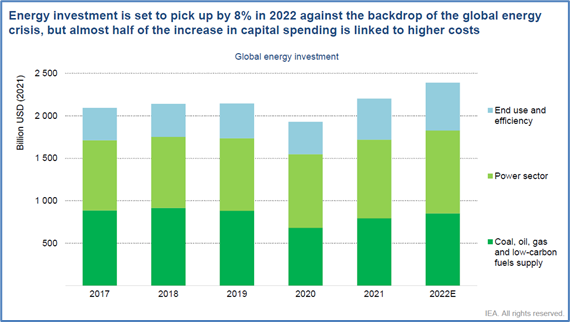
Source: IEA
However, this modest increase in investment is insufficient to meet global energy demand and the net zero goal shown above, increasing the risk of a future gap between demand and supply.

Investment shortage by energy source
The chart below shows a modest increase in energy investment during the past three years. However, these modest increases will soon decrease due to significant efforts to slow investment in fossil fuel development projects. According to this forecast, the investment level reached in 2014 won’t return until 2030.
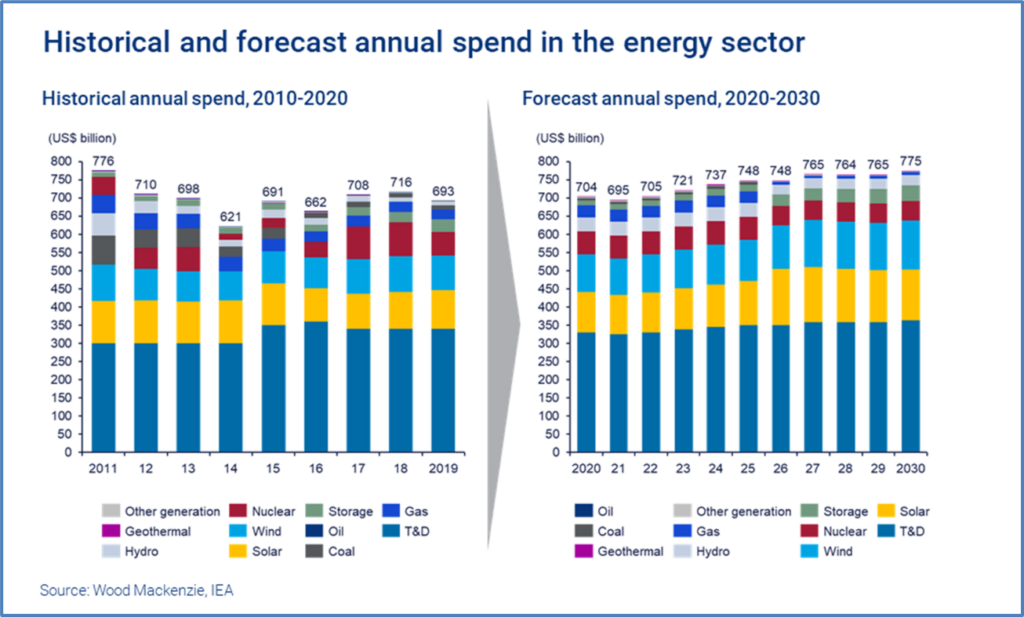
Source: WoodMackenzie
The impediments to more investment include:
- Permitting gridlock in most countries.
- Perceptions of increasing risk by investors.
- The rapid increase in energy prices in 2022, triggered by the Russian invasion of Ukraine, resulted in some countries interfering in energy markets. The impact was to increase risk and reduce returns for fossil fuel and renewable energy generation facilities.
- Lack of grid capacity to distribute renewable electricity.
The impediments will likely continue. They reduce investment and slow construction, increasing the risk of a future gap between demand and supply.
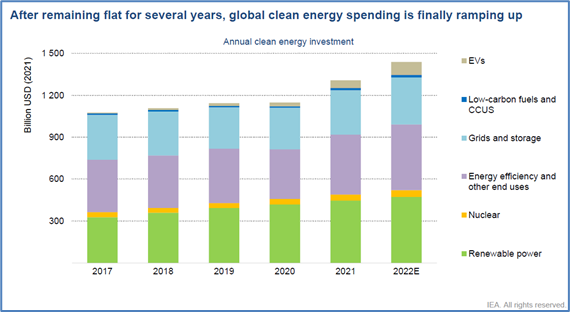
Insufficient clean energy investment
Increasing global clean energy investment significantly is the key to displacing fossil fuels in the worldwide mix of energy sources. The chart below shows that investment is finally growing after staying mostly flat since before 2017.
Source: IEA
However, this investment level does not yet satisfy the growth in demand. It’s not sufficient to reduce the burning of fossil fuels. This modest investment growth comes nowhere near meeting the quadrupling of capacity required to achieve net zero.
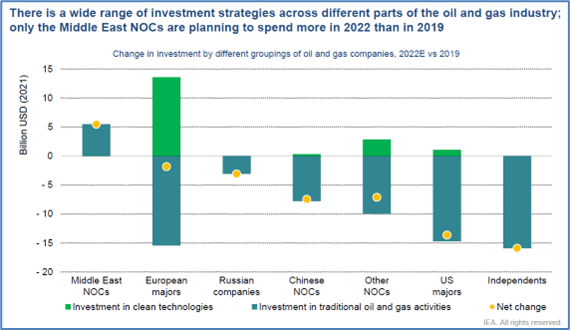
Insufficient oil and natural gas industry investment
The chart below shows that the oil and natural gas industry’s investment in new fossil fuel production projects is mostly trending down.
Source: IEA
If this trend continues, it will widen the gap between demand and supply, increasing consumer prices.
European majors are not investing because the EU is pushing for a rapid energy transition. Russia has chased away investors due to its unconscionable invasion of Ukraine. Other companies are not investing due to a perception of more uncertainty and risk.
US majors are not investing because the Biden administration continues to pursue a schizophrenic energy policy. It’s torn between environmentalists seeking a magical energy transition and energy consumers who want lower prices and continuity of supply. Recently the administration may have changed course again by approving the ConocoPhillips Willow development project in Alaska and the Alaska LNG project.
We can expect more counter-productive actions from the Biden administration, including:
- Threatening windfall taxes.
- Throwing massive subsidies at EV production to the point that the EU complained.
- Restricting the sale of mineral rights on federal lands.
- Releasing a negligible amount of oil from the US Strategic Petroleum Reserve.
- Begging the Saudis and other OPEC members to increase production even though they’ve decided to decrease output.
- Allowing Venezuela to increase production.
- Musing about introducing petroleum export controls.
- Not speaking out against ineffective hydraulic fracturing bans in some states.
- Not speaking out against denials of state distribution pipeline permits.
- Cancelling the Keystone XL Pipeline. That was easy because it made political points with progressives in the USA. It had the support of the Canadian Liberal government, keen to reduce oil & natural gas production.
Continuing confusion in the future will result in underinvestment in oil & gas development leading to higher prices and the risk of energy insecurity.
Avoiding the risk of energy insecurity
All nations can avoid the looming risk of energy insecurity by being more realistic about the timeline of the energy transition. We can:
- Reduce hurdles for energy development project approvals.
- Increase energy conservation.
- Transition various industries to low-carbon technologies as they mature.
- Encourage households to embrace modest lifestyle changes.
- Discourage governments from offering massive subsidies in a likely futile effort to accelerate the energy transition.
About Yogi Schulz
Here’s the link to my IT blog at IT World Canada:
Yogi Schulz is an information technology consultant who works extensively in the petroleum industry to select and implement administrative, operations, and geotechnical systems. He writes regular articles about developments in the energy industry and technology.
You can contact Yogi Schulz through his LinkedIn profile at this link.
Share This: